


The Rise of Solo Living: Why More People Are Choosing Independence

For generations, the societal script was clear: grow up, get married, and build a household together. The concept of living alone was often viewed as a temporary transition—a waiting room for adulthood—or perhaps an unfortunate circumstance. But that script is being rewritten before our eyes. Across bustling metropolises and quiet towns alike, more people than ever are consciously choosing to live by themselves.
This isn’t just a fleeting trend among young professionals in city centers. It’s a profound demographic shift spanning ages, cultures, and economic backgrounds. From twenty-somethings prioritizing their careers to older adults seeking autonomy in their golden years, the decision to live solo is reshaping our cities, our economies, and our understanding of happiness.
What was once seen as an alternative lifestyle is fast becoming a mainstream choice. But what is driving this surge in independence? Is it merely a result of urbanization, or is there a deeper psychological shift at play? As we navigate a world that is increasingly connected digitally yet physically separated, understanding the nuances of solo living has never been more relevant. This article explores the factors fueling this global phenomenon and what it means for the future of how we live.
What Is Solo Living?
At its core, solo living is exactly what it sounds like: a household of one. However, the modern definition goes beyond simple census data. It represents a lifestyle choice centered on autonomy. It is about curating a space that is entirely your own, where the rhythms of daily life are dictated solely by personal preference rather than negotiation or compromise.
It is crucial to distinguish between living alone and being lonely. While the two can overlap, they are not synonymous. Many solo dwellers report feeling deeply connected to their communities, friends, and families. They view their home as a sanctuary—a place to recharge—rather than a fortress of solitude. In this context, independence is not about isolation; it is about having the agency to choose when to engage with the world and when to retreat.
Why Solo Living Is Growing Globally
The statistics are telling. In many developed nations, single-person households are the fastest-growing demographic. But this isn’t just a Western phenomenon; rates are climbing in parts of Asia and South America as well. Several broad societal currents are pushing this tide.
First, social norms are softening. The stigma once attached to being single or divorced has largely evaporated in many cultures. There is no longer a singular “correct” timeline for adulthood. Second, rapid urbanization draws people to cities where housing is designed for smaller footprints and careers often demand mobility. When your job might take you from London to Singapore in a year, a lightweight, flexible household of one often makes the most logistical sense.
Key Factors Driving the Rise of Solo Living
While broad trends set the stage, specific drivers are motivating individuals to sign that lease for a one-bedroom apartment.
Career Flexibility and Remote Work
The modern career path is rarely linear. The gig economy, freelance work, and the explosion of remote opportunities have untethered income from geography. For many, this freedom is best enjoyed solo. Without the need to coordinate two commutes or compromise on a partner’s job location, individuals can relocate for a dream project or move closer to nature while keeping their job. This career-first mobility incentivizes a leaner, more agile lifestyle that solo living supports perfectly.
Financial Independence Trends
Historically, pooling resources was a necessity for survival. While the cost of living remains a challenge, rising financial independence—particularly among women—has altered the equation. As earning power increases and financial literacy improves, more people can afford the premium of living alone. It allows for complete control over the budget. There are no arguments about the thermostat setting, grocery bills, or subscription services. Every dollar spent is a personal choice, offering a sense of control that is deeply appealing in uncertain economic times.
Delayed Marriage and Relationship Choices
The average age of marriage has been steadily climbing for decades. People are spending more of their twenties and thirties unpartnered, using these years for education, travel, and self-discovery. Furthermore, relationship dynamics are changing. “Living apart together” (LAT) is a growing trend where committed couples choose to maintain separate residences to preserve their individuality. This shift suggests that intimacy doesn’t always require shared square footage.
Mental Wellness and Personal Space
In an always-on world, the value of silence has skyrocketed. For highly sensitive people or introverts, a shared home can be a source of constant, low-level stress. Solo living offers an environment where one can fully decompress without the need to perform socially. It provides the mental space to process emotions, pursue hobbies without judgment, and establish routines that prioritize mental health, such as meditation or uninterrupted sleep.
How Solo Living Is Changing Housing Trends
Real estate developers are taking notice. The days of the standard three-bedroom suburban home being the default are fading. In its place, we are seeing a boom in micro-apartments and studios designed specifically for one.
These spaces prioritize efficiency and location over sprawling square footage. We are also seeing the rise of “co-living” buildings—a hybrid model where residents have private bedrooms and bathrooms but share high-end communal kitchens, lounges, and workspaces. This model attempts to solve the isolation puzzle, offering the privacy of solo living with the built-in community of a dorm or village. It suggests that while people want their own space, they don’t necessarily want to be alone.
Benefits of Living Alone
The allure of the solo life is often found in the small details of daily existence.
Autonomy and Decision-Making
There is a profound freedom in total autonomy. You decide what to eat for dinner, what music to play, how to decorate, and when to clean. This might seem trivial, but the cumulative effect of hundreds of micro-decisions made solely for oneself can be incredibly empowering. It fosters a sense of self-reliance and confidence that permeates other areas of life.
Personal Growth and Self-Discovery
When you live alone, there is nowhere to hide from yourself. You are forced to confront your habits, your fears, and your true preferences. This solitude can be a catalyst for immense personal growth. You learn to fix the leaky faucet, manage your finances, and entertain yourself. You discover what you actually enjoy doing when no one is watching, leading to a more authentic sense of self.
Challenges of Solo Living
Of course, independence comes with a price tag—both literally and figuratively.
Rising Living Costs
The “single tax” is real. Solo dwellers bear the full burden of rent, utilities, and internet bills without a partner to split the costs. In expensive urban centers, this can make solo living a luxury accessible only to the affluent, pushing others into shared housing out of necessity rather than choice.
Social Connection and Loneliness Concerns
While being alone doesn’t equal loneliness, the risk is higher. Without the built-in social interaction of roommates or family, solo dwellers must be proactive about their social lives. If you don’t make plans, you might go days without speaking to another person face-to-face. This requires effort and vulnerability, and during difficult times—like illness or job loss—the lack of an immediate support system at home can be daunting.
Impact of Technology on Solo Lifestyles
Technology acts as the great enabler of the solo lifestyle. Smart home devices—from automated lights to security cameras—provide a layer of safety and convenience that makes managing a home alone easier.
More importantly, digital communities bridge the physical gap. Video calls, social media, and online gaming allow solo dwellers to maintain a robust social presence without leaving their living room. Online services also play a huge role; grocery delivery, task apps for furniture assembly, and ride-sharing services remove many of the logistical hurdles that once made living alone difficult. You no longer need a roommate to help you move a sofa or pick up soup when you’re sick; there’s an app for that.
Solo Living and Lifestyle Choices
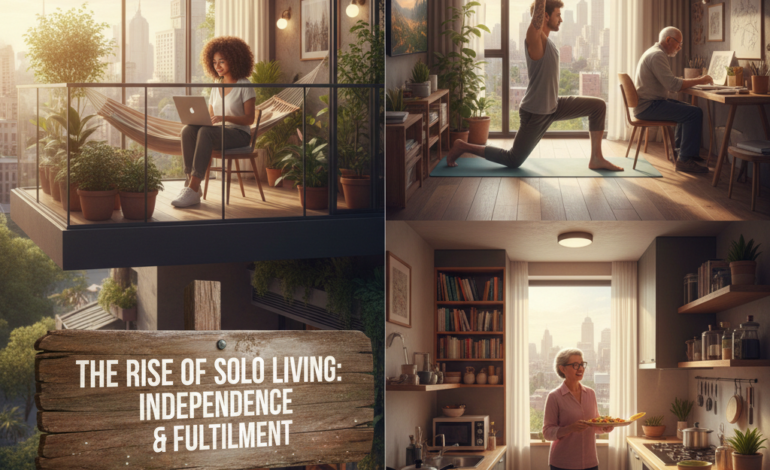
Living alone opens up a unique canvas for lifestyle design. Without the need to synchronize schedules, daily routines become fluid. You can wake up at 5 AM for yoga or work until midnight without disturbing anyone.
This flexibility extends to leisure. Solo travel becomes easier to coordinate. Hobbies that require space or silence—like painting, writing, or learning an instrument—can flourish. The home becomes a true reflection of the individual’s passions. Whether it’s turning the dining area into a home gym or filling the living room with plants, the environment supports the lifestyle, rather than constraining it.
Cultural Differences in Solo Living Adoption
The embrace of solo living is not uniform across the globe.
Western vs Global Trends
In Scandinavian countries, living alone is the norm for young adults and is supported by strong social safety nets. In contrast, in many Southern European and Asian cultures, multi-generational households remain common, and moving out before marriage can be seen as unusual. However, even in these collectivist cultures, the trend is shifting. In Japan, the concept of “ohitorisama” (people living and doing things alone) is gaining traction, reflecting a shift in how independence is viewed.
Urban vs Rural Lifestyles
The divide is also geographic. Solo living is predominantly an urban phenomenon. Cities offer the infrastructure—smaller apartments, public transit, social venues—that makes single life viable and exciting. In rural areas, where housing stock is larger and community reliance is higher, the shift is slower, though still present as digital connectivity improves.
Future Outlook for Solo Living Trends
The trajectory points toward a continued rise in solo living. Demographic shifts, such as aging populations and falling birth rates, suggest that single-person households will remain a significant part of the social fabric.
We can expect housing to evolve further to meet this need. We might see more flexible housing laws, innovative architecture that maximizes small spaces, and policies that address the “single tax.” Culturally, the narrative will likely shift from “sad singleton” to “empowered individual,” recognizing solo living as a valid, fulfilling stage of life—or even a permanent destination—rather than a waiting room.
Embracing the Solo Journey
The rise of solo living is more than just a statistical blip; it is a reflection of our evolving values. It signals a society that increasingly prizes autonomy, self-discovery, and the freedom to design one’s own life. While challenges like affordability and connection remain, the benefits of independence are compelling for millions. Whether for a season or a lifetime, choosing to live alone is a brave declaration of self-sufficiency. As our cities and cultures adapt to this new reality, the solo dweller is stepping out of the shadows and into the center of modern life.
FAQs – Solo Living and Independence
Why are more people living alone?
People are choosing to live alone due to financial independence, delayed marriage, the flexibility of remote work, and a desire for personal autonomy and mental wellness.
Is solo living becoming more common?
Yes, single-person households are one of the fastest-growing demographics globally, particularly in urban areas and developed nations.
What are the benefits of living alone?
Benefits include total control over your environment and schedule, freedom from compromise, and increased opportunities for self-discovery and personal growth.
Does solo living increase loneliness?
It can, but it doesn’t have to. While solo dwellers must be more proactive about socializing, many report high levels of satisfaction and connection. It distinguishes between being alone (physical state) and loneliness (emotional state).
How can people thrive while living independently?
Thriving solo involves creating a space you love, maintaining a proactive social life, establishing healthy routines, and leveraging technology to stay connected and safe.