




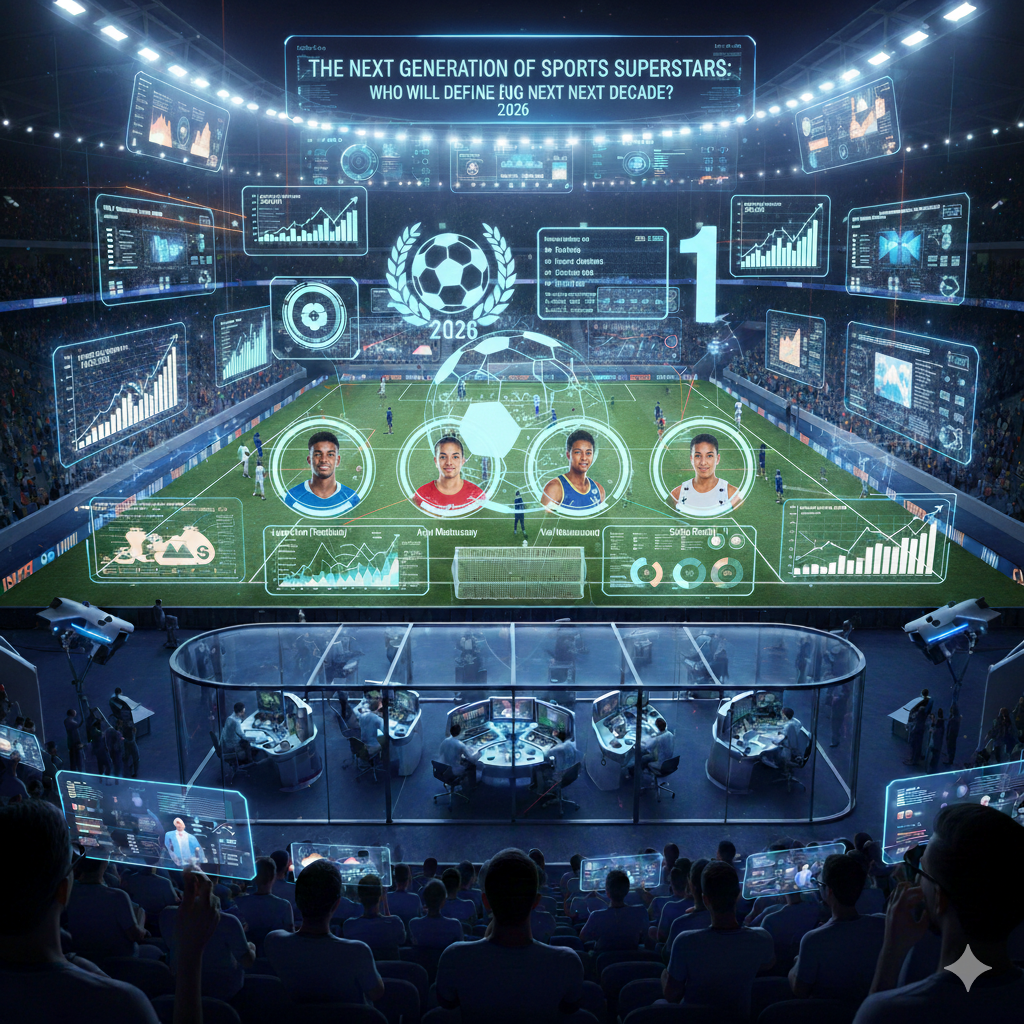
The landscape of professional sports is currently undergoing a seismic shift. For the past fifteen years, a specific cohort of athletes—names like Messi, Ronaldo, LeBron, Hamilton, and Serena—have held a monopolistic grip on global attention. They did not just participate in their sports; they defined them. As these titans reach the twilight of their careers or step into retirement, a massive vacuum has opened at the summit of athletic achievement.
We are now witnessing the real-time coronation of the next generation. However, the criteria for what makes a “superstar” have evolved fundamentally. It is no longer enough to simply be the best player on the pitch or the court. The modern icon is a hybrid entity: part elite athlete, part global brand, and part digital content creator.
This transition is driven by rapid advancements in athletic development, data analytics, and the borderless nature of digital media. The next decade will not just be defined by who scores the most goals or wins the most championships, but by who can leverage technology and globalization to capture an audience that is more fragmented than ever before. This article explores the emerging talents, the systems creating them, and the unique challenges they face in a hyper-connected world.
What Defines a Modern Sports Superstar?
The traditional definition of a sports superstar relied heavily on on-field dominance. While performance remains the foundation, the architecture of stardom has become more complex.
Performance, Branding, and Global Influence
To reach the upper echelon of global recognition today, an athlete must transcend their sport. Performance acts as the entry ticket, but branding determines staying power. Modern superstars are businesses unto themselves. They align with fashion houses, tech startups, and social causes that resonate with their personal values and those of their demographic. Global influence is now measured by an athlete’s ability to move markets—whether that is selling out a sneaker line in minutes or impacting the stock price of a sponsor.
Social Media and Personal Brand Power
The most significant shift in the last decade is the decentralization of media power. Athletes no longer rely solely on broadcasters or journalists to tell their stories. Through platforms like Instagram, TikTok, and YouTube, they curate their own narratives. This direct-to-consumer relationship allows young athletes to build massive, loyal followings before they even sign their first professional contract. A player’s “brand power” is now a tangible asset that teams evaluate during recruitment, understanding that a signing brings not just talent, but an existing audience.
Why a New Generation Is Emerging Now
The surge of young talent exploding onto the scene is not a coincidence; it is the result of industrialized talent development.
Youth Academies and Advanced Training
Youth academies have evolved from training grounds into high-performance laboratories. In European football, academies like La Masia (Barcelona) or Cobham (Chelsea) operate with university-level sophistication. In the United States, the AAU circuits and specialized prep schools serve a similar function for basketball. Athletes are entering professional environments with a level of tactical understanding and technical refinement that was previously seen only in veterans. They are professionals long before they are paid.
Data Analytics Shaping Athlete Development
The “eye test” has been supplemented, and often superseded, by data. Clubs and federations use granular metrics to identify potential superstars at increasingly younger ages. Biomechanical analysis helps refine a pitcher’s motion or a sprinter’s stride to maximize efficiency and minimize injury risk. This data-driven approach means that talent is rarely missed, but it also means the physical demands are optimized to the absolute limit, producing athletes who are faster, stronger, and more explosive than their predecessors.
Key Sports Producing the Next Global Icons
While every sport has its heroes, specific disciplines are currently positioned to export their stars to the general public more effectively than others.
Football (Soccer) Rising Stars
Global football remains the dominant cultural force in sports. The post-Messi/Ronaldo era is being filled by players who redefine tactical roles. We are seeing the rise of the “total footballer”—players like Jude Bellingham or Vinicius Jr.—who combine immense physical athleticism with high technical IQ.
This generation is less specialized; forwards are expected to defend, and defenders must be playmakers. The narrative is shifting from a duel between two individuals to a broader field of diverse talents from Norway, Brazil, England, and Spain, all competing for the Ballon d’Or.
Basketball’s Next Generation
The NBA has successfully globalized its product. The face of the league is increasingly international, with superstars emerging from Greece, Slovenia, Serbia, and France. Victor Wembanyama represents the ultimate evolution of the basketball player: an alien combination of height, wingspan, and guard-like agility. This internationalization extends the league’s reach, creating fervent fanbases in Europe and Africa that see themselves represented in the league’s elite tier.
Tennis, Formula 1, and Individual Sports
Individual sports are thriving on personality. In tennis, the “Big Three” era is transitioning to a rivalry between dynamic young players like Carlos Alcaraz and Jannik Sinner, who play with a speed and aggression that appeals to younger viewers. Meanwhile, Formula 1 has utilized media (specifically Drive to Survive) to turn drivers into pop-culture icons. Lando Norris and Oscar Piastri are examples of drivers whose fame is amplified by their digital presence and relatability, drawing in a demographic that previously ignored motorsport.
Women’s Sports Growth and New Icons
Perhaps the most exciting growth vector is in women’s sports. The commercial and cultural investment in women’s football and basketball has produced household names like Aitana Bonmatí and Caitlin Clark. These athletes are not just famous within their sports; they are cultural figures driving conversations about equity, investment, and media coverage. The “new icons” of women’s sports are breaking viewership records and proving that the audience demand is massive and sustainable.
Role of Technology in Developing Future Superstars
Technology is the silent partner in the rise of the modern athlete, working in the background to optimize human potential.
Performance Analytics and Wearable Tech
Wearable technology is now ubiquitous. Devices track heart rate variability, sleep quality, and workload in real-time. This allows coaches to tailor training sessions to the specific physiological state of the athlete on any given day. For the athlete, this means peak performance can be sustained for longer periods, and “off days” are calculated rather than accidental.
AI-Driven Training Programs
Artificial Intelligence is beginning to dictate training regimens. AI algorithms can analyze thousands of hours of game footage to predict opponent tendencies or identify micro-weaknesses in a player’s game. Virtual reality simulations allow quarterbacks or midfielders to practice decision-making without the physical toll of contact, accelerating mental development.
How Social Media Is Changing Athlete Fame
The mechanism of fame has shifted from observation to interaction.
Direct Fan Interaction
Social media creates an illusion of intimacy. When a fan receives a reply from a star on X (formerly Twitter) or sees a candid BeReal post, the emotional connection deepens. This removes the “mystique” that protected older generations of stars but replaces it with “relatability,” which is the currency of the modern internet.
Personal Storytelling and Branding
Athletes are becoming their own media companies. They produce documentaries, host podcasts, and run YouTube channels. This allows them to control the narrative during controversies and highlight their interests outside of sports, whether that is fashion, gaming, or activism. This multi-dimensional storytelling creates a more resilient personal brand that can survive a dip in on-field performance.
Globalization of Talent Development
The search for the next superstar has no geographical boundaries.
International Academies
Major franchises are planting flags in untapped markets. The NBA Academy in Africa and MLB development centers in Asia are designed to funnel talent directly to the top leagues. This infrastructure ensures that a kid in Lagos or Seoul has a clearer pathway to professional stardom than ever before.
Cross-Border Competitions
Youth tournaments are increasingly international. The UEFA Youth League or the Next Gen Series allows top prospects to test themselves against global peers at age 16 or 17. This cross-pollination of styles forces young athletes to adapt to different tactical systems early in their development, producing more well-rounded competitors.
Commercial Impact of Rising Superstars
The financial ecosystem surrounding young athletes is exploding.
Sponsorship Deals and Endorsements
We are seeing a shift in how contracts are structured. Endorsement deals are happening earlier, often before athletes turn professional, thanks to changes like the NIL (Name, Image, Likeness) rules in US college sports. Brands are eager to lock in talent at the ground floor. Furthermore, athletes are seeking equity stakes rather than just cash, looking to grow their wealth alongside the companies they endorse.
Media Rights and Audience Growth
Broadcasters recognize that younger audiences follow players, not just teams. Media rights deals are beginning to reflect this, with more content focused on individual player cams or “mic’d up” segments. The superstar drives the subscription model; when a global icon moves teams, the viewership (and revenue) follows them instantly.
Challenges Young Athletes Face Today
The road to stardom is paved with significant, modern obstacles.
Pressure of Early Fame
The spotlight burns brighter and earlier. A viral highlight clip can turn a 14-year-old into a celebrity overnight. This brings immense pressure to live up to the hype. Managing the mental health of young athletes who are dissected by millions of strangers online is a major challenge for agencies and families.
Injury Risks and Career Longevity
The physical demands of modern sports are higher than ever. The pace of play in the Premier League or the NBA creates a brutal load on young bodies. We are seeing a worrying trend of serious injuries (such as ACL tears) in young stars. Balancing the commercial demand to play every game with the biological need for rest is the primary conflict in modern sports medicine.
Despite the differences in their sports, the next generation shares key characteristics.
Versatility and Adaptability
Specialization is fading. The modern superstar is versatile. In basketball, “positionless” play is the standard. In football, full-backs play as midfielders. The ability to adapt to different coaching styles and tactical demands is essential for survival at the elite level.
Leadership and Mental Resilience
Talent gets you in the room; mentality keeps you there. The defining trait of the incoming generation is a unique form of resilience. They are growing up in a high-pressure, high-visibility environment. Those who succeed demonstrate emotional maturity and leadership qualities far beyond their years, capable of compartmentalizing the noise and performing when the lights are brightest.
Future Outlook: Will Superstars Be More Global Than Ever?
As we look toward the next decade, the concept of the “local hero” will likely diminish. The next generation of superstars will be born in one country, developed in another, and worshipped globally.
Multi-Sport Popularity
We are likely to see more crossover appeal. The lines between sports, fashion, and entertainment will continue to blur. Superstars will be cultural nomads, comfortable at a Met Gala as they are in a Champions League final.
Digital-First Fanbases
The fanbase of the future is digital-first. They may never attend a game in person, but they will consume every piece of content a player produces. This shifts the power dynamic further toward the individual athlete. The next decade will be defined by those who understand that they are not just playing a game; they are broadcasting a global reality show where performance is the plot, and they are the main character.
FAQs – Next Generation Sports Superstars
What makes an athlete a global superstar?
A global superstar combines elite, consistent performance with a strong personal brand and massive digital influence. They transcend their specific sport to become cultural icons recognized by people who may not even watch the games.
Which sports are producing the biggest young talents?
Currently, football (soccer) and basketball are the primary engines for global stars due to their worldwide reach. However, tennis, Formula 1, and women’s sports (particularly football and basketball) are rapidly producing high-profile young talents.
Social media allows athletes to bypass traditional media and connect directly with fans. It builds loyalty, allows for personal storytelling, and can monetize fame independently of a team salary. It transforms an athlete from a player into a personality.
Are younger athletes becoming stars faster?
Yes. Due to the viral nature of social media and the global broadcasting of youth tournaments, athletes are being identified and hyped at significantly younger ages than in previous decades.
Will future superstars be more internationally diverse?
Absolutely. Improved scouting networks, global academies, and data analytics mean that talent can be found in any corner of the globe. The concentration of stars from a few specific countries is diluting in favor of a truly global talent pool.
The Era of the Digital Gladiator
The torch is being passed. The era of Messi and Ronaldo provided a standard of excellence that seemed impossible to replicate, yet the incoming class of athletes is poised to push physical and commercial boundaries even further.
For the sports fan, this is a thrilling time. We are watching the evolution of the human athlete in real-time, aided by technology and amplified by the internet. The next decade will belong to those who can carry the weight of global expectation while moving with the speed and agility of the modern game. The stage is set, the cameras are rolling, and the next generation is ready to play.


