

The Global Startup Funding Slowdown: Is Venture Capital Recovering in 2026?
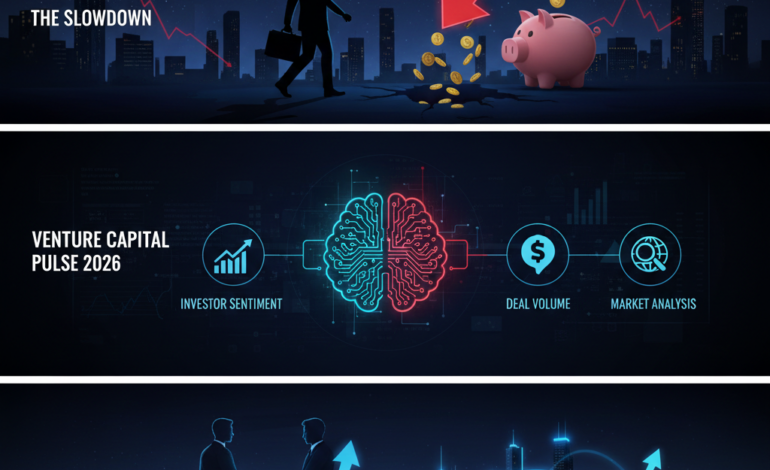

The global venture capital landscape has undergone a profound transformation over the last few years. After the exuberant peaks of 2021, where capital flowed freely and valuations soared to historic highs, the market entered a significant period of correction. Founders and investors alike have had to navigate a “funding winter,” characterized by caution, down rounds, and a renewed focus on fundamentals.
As we move through 2026, questions about recovery are paramount. Is the freeze finally thawing? Are we witnessing a return to robust investment activity, or has the fundamental model of venture capital shifted permanently? The answers are nuanced. While certain sectors like artificial intelligence and deep tech are attracting significant capital, the broader market remains disciplined. The “growth at all costs” mantra has been replaced by a demand for sustainable unit economics and clear paths to profitability.
This analysis explores the current state of global startup funding, examining the factors that led to the slowdown, the emerging trends defining 2026, and what the future holds for founders and investors navigating this reset ecosystem.
What Caused the Global Startup Funding Slowdown?
To understand the current recovery trajectory, we must first look at the drivers behind the contraction. The slowdown was not triggered by a single event but rather a confluence of macroeconomic shifts and market corrections.
Rising Interest Rates and Macroeconomic Pressure
For over a decade, low interest rates fueled a risk-on environment. Capital was cheap, and investors sought higher yields in alternative asset classes like venture capital. When central banks globally began raising rates to combat inflation, the cost of capital increased dramatically.
This shift had an immediate cooling effect. Safe assets like government bonds became more attractive relative to high-risk startup investments. Consequently, limited partners (LPs)—the institutions that fund VC firms—became more conservative with their allocations. This liquidity crunch trickled down to startups, resulting in fewer deals and smaller check sizes.
Shift from Growth-at-All-Costs to Profitability
During the boom years, investors often rewarded top-line growth regardless of burn rate. The priority was capturing market share. However, as public market valuations for unprofitable tech companies collapsed, private market sentiment followed suit.
The narrative shifted almost overnight. Investors began demanding efficiency. Startups were told to extend their runways, cut costs, and demonstrate a viable business model earlier in their lifecycle. Companies that could not pivot from hyper-growth to operational efficiency found themselves unable to raise follow-on capital, leading to a wave of shutdowns and distressed acquisitions.
Venture Capital Trends Leading Into 2026
As the market stabilizes, distinct trends have emerged that characterize the investment climate of 2026. These trends indicate a more mature, albeit more restrictive, environment.
Decline in Mega Funding Rounds
One of the most visible changes is the scarcity of “mega rounds”—investments exceeding $100 million. In 2021, these were commonplace, creating hundreds of new unicorns. Today, they are the exception rather than the rule.
Investors are wary of deploying massive amounts of capital into single assets without concrete proof of scalability and profitability. This reduction in mega-rounds has heavily impacted late-stage companies, forcing many to delay IPO plans or seek alternative financing structures such as debt or convertible notes.
Increased Due Diligence and Selective Investing
The pace of deal-making has slowed significantly. The days of term sheets being signed in 24 hours after a single Zoom call are over. Venture capitalists are conducting rigorous due diligence, digging deep into financial models, customer retention rates, and competitive moats.
This selectivity means that only the highest-quality startups are securing funding. Founders must be prepared for longer processes, more intrusive questions, and a higher bar for approval. While frustrating for entrepreneurs, this discipline is arguably creating a healthier ecosystem comprised of more robust companies.
Signs Venture Capital May Be Recovering
Despite the headwinds, there are tangible signals that the market is finding its footing. The recovery is not uniform across all sectors or stages, but momentum is building in specific pockets of the economy.
AI and Deep Tech Investment Growth
Innovation remains a powerful draw for capital. Artificial Intelligence (AI) and Deep Tech continue to command premium valuations and substantial investor interest. The promise of generative AI to revolutionize productivity across industries has created a supercycle of investment that defies the broader slowdown.
Investors are looking for proprietary technology and defensible IP. Startups building foundational models, advanced robotics, or breakthroughs in biotech are seeing strong demand. This suggests that while generalist SaaS or consumer apps may struggle, capital is still abundant for genuine technological breakthroughs.
Stabilizing Valuations
After years of volatility, valuations appear to be finding a floor. The massive disconnect between founder expectations and investor willingness has narrowed. Startups raising in 2026 are doing so at valuations that more accurately reflect historical multiples rather than the outliers of the pandemic era.
This reset is healthy for the ecosystem. It reduces the risk of future down rounds and ensures that employees joining startups are receiving equity with realistic upside potential.
Return of Late-Stage Deals
While mega rounds remain rarer, activity in late-stage venture is slowly picking up. Private equity firms and crossover investors, who largely retreated in 2023 and 2024, are beginning to deploy capital again. They are attracted by the corrected valuations and the quality of companies that have survived the downturn. This capital is crucial for pre-IPO companies needing liquidity to bridge the gap to the public markets.
How Startup Funding Dynamics Are Changing
The fundamental mechanics of how startups are funded and operated are evolving. The relationship between founder and investor is shifting toward a partnership focused on durability.
Emphasis on Revenue and Sustainability
The primary metric for success is no longer user growth; it is revenue quality and burn multiple. Investors want to see efficient growth. A startup growing 50% year-over-year with positive cash flow is now often more attractive than one growing 100% with massive losses.
This emphasis on sustainability changes how founders build their companies. Teams are staying smaller for longer, marketing budgets are scrutinized for ROI, and product-market fit is validated before aggressive scaling begins.
Longer Fundraising Cycles
Founders should anticipate that fundraising will take longer than in previous cycles. The average time to close a round has extended from a few months to often six months or more. This requires startups to plan their cash flow meticulously, ensuring they have 18 to 24 months of runway to weather potential delays in securing fresh capital.
Role of Global Economic Conditions
Venture capital does not exist in a vacuum. It is intrinsically linked to the broader global economy.
Interest Rates and Liquidity
The trajectory of interest rates remains the most significant variable. If rates stabilize or begin to decline in 2026, the cost of capital will decrease, potentially unlocking more liquidity for LP allocations. Conversely, if inflation proves stubborn and rates remain elevated, the high bar for investment will persist.
Public Market Performance
The IPO market is the ultimate exit for venture capitalists. A stagnant IPO market traps capital in illiquid assets, preventing VCs from returning money to LPs and raising new funds. A reopening of the IPO window in 2026 would be a major catalyst for the entire ecosystem, flushing liquidity back into the system and encouraging early-stage investment.
Regional Differences in VC Recovery
The recovery is uneven geographically, influenced by local economic conditions and regulatory environments.
U.S. Venture Ecosystem
The United States remains the dominant force in global venture capital. The depth of its capital markets and the maturity of its ecosystem allow it to rebound faster than other regions. Silicon Valley continues to lead in AI and Deep Tech, drawing the majority of global funding in these sectors.
Europe and Asia Investment Trends
Europe is seeing a focus on climate tech and industrial innovation, supported by government initiatives. However, the fragmentation of the European market continues to pose challenges for scaling.
Asia presents a mixed picture. While Southeast Asia and India show promise with growing digital populations, geopolitical tensions and regulatory shifts in China have dampened foreign investment in what was once a massive growth engine.
Emerging Market Challenges
Emerging markets face steeper challenges. Currency fluctuations and political instability make them riskier bets for global investors during a downturn. Startups in these regions often face a higher cost of capital and must rely more heavily on local or regional investors.
Impact on Early-Stage vs. Late-Stage Startups
The funding dynamics differ significantly depending on the maturity of the company.
Seed Funding Resilience
Seed and pre-seed funding have remained remarkably resilient. The check sizes are smaller, and the investment timeline is long enough (7-10 years) that investors are less concerned with immediate macroeconomic conditions. They are betting on the long-term potential of the team and the idea.
Growth-Stage Funding Gaps
The “valley of death” has moved to the Series B and Series C stages. Companies that have proven product-market fit but have not yet achieved scale or profitability are finding it difficult to raise. This “growth gap” is where many startups are stalling, leading to consolidation and M&A activity as companies seek exits rather than further dilution.
New Investor Strategies in 2026
Investors are adapting their strategies to mitigate risk and capture value in the new environment.
Smaller Rounds and Staged Funding
Investors are increasingly using tranche structures, where capital is released in stages based on the achievement of specific milestones. This protects the investor’s downside and forces the startup to remain disciplined. We are also seeing smaller initial round sizes, with provisions for top-ups if the company performs well.
Corporate Venture Capital Participation
Corporate Venture Capital (CVC) is playing a larger role. Large corporations, flush with cash, are investing in startups to gain access to innovation and strategic partnerships. For startups, CVCs can offer not just capital but also distribution channels and technical expertise.
Risks Facing Venture Capital Markets
Despite the signs of recovery, significant risks loom on the horizon.
Market Volatility
Economic uncertainty persists. Potential recessionary pressures, supply chain disruptions, or banking sector instability could derail the recovery. VCs are hoarding “dry powder” (unspent capital) to support their existing portfolio companies rather than making new bets.
Regulatory Shifts and Geopolitical Risks
Antitrust scrutiny is increasing globally, potentially limiting the acquisition exits that VCs rely on. Furthermore, geopolitical tensions, particularly regarding technology transfer and trade, introduce complexity for cross-border investments.
Opportunities for Founders During a Funding Reset
A downturn is often the best time to build a company. With less noise and fewer competitors fueled by cheap capital, disciplined founders can capture market share.
Building Sustainable Business Models
The constraints of the current market force founders to build better businesses. By focusing on unit economics from day one, startups become more resilient. They are less dependent on the whims of external capital and retain more control over their destiny.
Lean Growth Strategies
Constraint breeds creativity. Startups are finding innovative ways to grow without massive ad spend. Product-led growth, community building, and organic marketing are becoming central strategies. These approaches often lead to higher customer loyalty and lower acquisition costs.
Future Outlook for Venture Capital
Looking beyond 2026, the venture capital industry is likely to look different than it did in the past decade.
Long-Term Innovation Cycles
We are at the beginning of a new innovation cycle driven by AI, clean energy, and bio-manufacturing. These sectors require patient capital and deep expertise. The VC firms that succeed will be those that specialize and add real value beyond just writing checks.
Evolution of Startup Funding Models
The traditional equity-only model is being supplemented by alternative financing. Revenue-based financing, venture debt, and other non-dilutive options are becoming mainstream. This gives founders more flexibility and aligns incentives between capital providers and operators.
In summary, while the “easy money” era is over, the venture capital ecosystem is not dead—it is maturing. The recovery in 2026 is real, but it is rational. For founders who can demonstrate value, efficiency, and vision, capital is available. For investors, the focus has returned to what matters most: backing transformative companies that can endure.
FAQs – Venture Capital Recovery 2026
Is venture capital recovering in 2026?
Yes, but cautiously. While activity is increasing compared to the lows of 2023-2024, it is a disciplined recovery. Investors are active but highly selective, prioritizing profitability and sustainable growth over potential and speed.
Why did startup funding slow down globally?
The slowdown was primarily driven by rising interest rates, which increased the cost of capital, and a correction in public market valuations, which trickled down to private markets. This led investors to shift focus from growth-at-all-costs to capital efficiency.
Which sectors are attracting VC investment?
Artificial Intelligence (AI), deep tech, climate tech, and biotech are seeing the strongest interest. Investors are flocking to sectors that offer genuine technological innovation and long-term defensive moats.
Are valuations improving for startups?
Valuations are stabilizing after a significant reset. They are generally lower than the 2021 peaks but are returning to historical norms. This alignment reduces the risk of down rounds and sets more realistic expectations for exits.
What should founders expect from investors now?
Founders should expect rigorous due diligence, longer timelines to close deals, and a demand for clear paths to profitability. Investors are acting more as partners looking for sustainable business models rather than just rapid user acquisition.