

Remote Work 2.0: How Global Companies Are Reshaping the Workplace
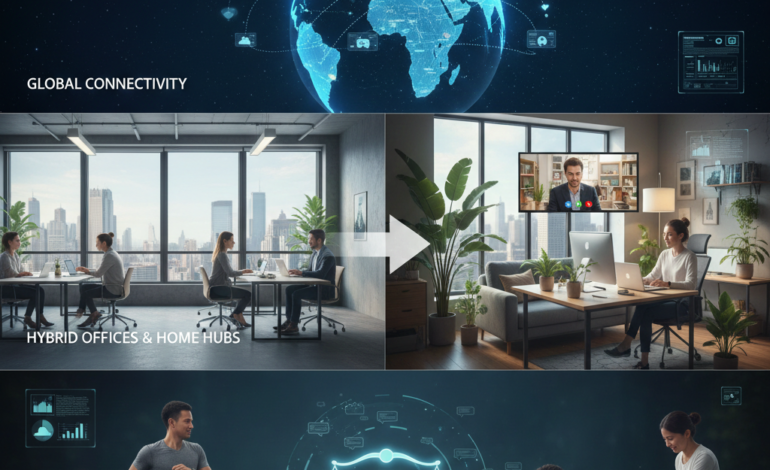

The grand experiment of 2020 has settled into a new, permanent reality. While the initial shift to remote work was reactive—a scramble to maintain operations during a global crisis—the current phase is strategic. This is Remote Work 2.0. It is no longer about whether employees can work from home, but rather how organizations can optimize a distributed workforce for innovation, efficiency, and global reach.
For entrepreneurs and business leaders, this shift represents a fundamental change in operational philosophy. The days of strictly centralized office cultures are fading, replaced by flexible, technology-driven ecosystems that prioritize output over physical presence. However, this transition is not without friction. Companies are navigating complex questions regarding culture, compliance, and connection in a digital-first world.
This analysis explores the evolution of Remote Work 2.0, examining the economic drivers, technological enablers, and management strategies that are defining the next decade of global business.
What Is Remote Work 2.0?
Remote Work 1.0 was characterized by the digital replication of the physical office. Zoom calls replaced boardroom meetings, and Slack channels replaced water cooler chat, but the fundamental structure of the workday remained tethered to the “9-to-5” synchronous model.
Remote Work 2.0 marks a maturation of this concept. It moves beyond simple replication toward a reimagining of how work gets done. It acknowledges that asynchronous communication, results-based performance, and borderless talent acquisition are not just stopgap measures but competitive advantages.
This phase is defined by intentionality. Companies are deliberately designing workflows that support hybrid or fully remote models, rather than treating remote employees as outliers. Whether it is a “remote-first” startup or a legacy enterprise adopting a “3-2” hybrid schedule, the common thread is the decoupling of productivity from proximity.
Why Global Companies Are Reshaping the Workplace
The driving forces behind this reshaping are multifaceted, but they largely stem from two areas: talent competition and operational efficiency.
Talent Competition and Globalization
In a traditional model, a company’s talent pool is limited to a commuting radius around its headquarters. Remote Work 2.0 shatters this geographical constraint. By hiring globally, businesses can access specialized skills that may be scarce or overpriced in their local markets. For an entrepreneur in London, hiring a developer in São Paulo or a customer success manager in Manila is now a standard operational lever, not an outsourcing anomaly.
Productivity and Cost Efficiency Goals
Real estate has historically been the second-largest expense for most organizations after payroll. By reducing physical footprints, companies can redirect capital toward R&D, employee benefits, or technology infrastructure. Furthermore, despite early skepticism, data consistently suggests that knowledge workers often maintain or increase productivity when granted flexibility, provided the right systems are in place.
Key Trends Driving Remote Work 2.0
Several operational shifts are propelling this new era of work.
Hybrid Work Structures
The binary debate of “office vs. home” has largely settled into a spectrum of hybrid arrangements. The hybrid model acknowledges the value of in-person collaboration for strategic planning and creative brainstorming while preserving deep-work time at home. Successful implementation requires clear policies on when and why physical presence is necessary, moving away from arbitrary mandates.
Digital Collaboration Tools
The technology stack has evolved from basic video conferencing to sophisticated ecosystem management.
- AI-driven communication platforms: Tools that transcribe meetings, summarize action items, and translate languages in real-time are reducing the friction of cross-border collaboration.
- Asynchronous workflows: Platforms that allow for video updates (like Loom) or collaborative documentation (like Notion) enable teams to move projects forward without requiring simultaneous availability.
Results-Based Performance Models
Remote Work 2.0 demands a shift from measuring inputs (hours logged) to measuring outcomes (milestones achieved). Managers are learning to evaluate performance based on deliverables rather than visibility. This transition eliminates “presenteeism”—the pressure to be seen at a desk—and fosters a culture of accountability.
Distributed Global Teams
With the logistical barriers to cross-border hiring lowered by Employer of Record (EOR) services, companies are building truly global teams. This allows for “follow-the-sun” workflows where projects advance 24 hours a day as handoffs occur across time zones, significantly accelerating product development cycles.
Benefits of Remote Work for Businesses
The adoption of distributed models offers tangible returns for organizations willing to adapt.
Reduced Overhead Costs
Beyond rent, the costs associated with utilities, office maintenance, supplies, and commuter subsidies drop significantly in a remote-first or hybrid setup. These savings can improve cash flow—a critical factor for startups and SMEs navigating economic volatility.
Increased Workforce Flexibility
Remote models allow companies to scale their workforce up or down with greater agility. Without the need to procure desk space for every new hire, businesses can expand rapidly into new markets. Additionally, offering flexibility is a powerful retention tool; employees are less likely to leave a role that accommodates their lifestyle needs.
Benefits for Employees
The workforce has driven much of the demand for Remote Work 2.0, citing significant improvements in quality of life.
Work-Life Integration
The rigid compartmentalization of “work” and “life” is being replaced by integration. Employees can structure their days to accommodate personal responsibilities—such as childcare or health appointments—without sacrificing professional output. This autonomy often leads to higher job satisfaction and lower turnover rates.
Reduced Commuting and Lifestyle Flexibility
Eliminating the daily commute reclaims hundreds of hours annually for the average worker. This time can be reinvested in rest, family, or upskilling. Furthermore, “digital nomadism” or simply moving to lower-cost-of-living areas allows employees to optimize their financial health without stalling their careers.
Challenges Companies Face with Remote Work
Despite the advantages, Remote Work 2.0 introduces distinct complexities that leaders must manage.
Team Cohesion and Communication
Building a unified company culture is significantly harder when employees rarely meet face-to-face. Spontaneous interactions—the “collision effect” that often sparks innovation—must be engineered virtually. Without intentional team-building efforts, silos can form, and employees may feel isolated or disconnected from the company’s mission.
Burnout and Work Boundaries
The digital tether to the workplace can make it difficult for employees to disconnect. The blurring of physical boundaries often leads to extended work hours and “always-on” expectations. Organizations face the risk of employee burnout if they do not model and enforce healthy disconnection practices.
Leadership and Management in Remote Work 2.0
The skillset required for effective management is evolving. The “management by walking around” style is obsolete in a distributed environment.
Remote-First Leadership Styles
Leaders must become expert communicators, over-indexing on clarity and documentation. In a text-heavy environment, tone and intent can be easily misinterpreted. Emotional intelligence is paramount; leaders need to proactively check in on the well-being of their teams, as distress signals are harder to spot over Zoom than in a physical office.
Trust-Based Management Practices
Micromanagement is toxic in a remote setting. Remote Work 2.0 relies on a high-trust pact between employer and employee. Leaders must provide clear objectives and the necessary resources, then step back to let the team execute. Surveillance software or excessive check-ins often backfire, eroding trust and reducing productivity.
Technology’s Role in the Future Workplace
Technology is the scaffolding that holds the distributed workplace together.
AI Productivity Tools
Artificial Intelligence is acting as a force multiplier for remote teams. Generative AI assists with coding, drafting content, and analyzing data, allowing distributed workers to achieve more with fewer resources. AI scheduling assistants manage complex time-zone logistics, ensuring that collaboration remains seamless.
Virtual Workspaces and Automation
The concept of the “metaverse” or virtual offices is gaining traction for specific use cases, such as training or immersive design reviews. Meanwhile, workflow automation tools (like Zapier) connect disparate software platforms, ensuring that data flows smoothly between remote employees without manual entry.
How Workplace Culture Is Changing
Culture in Remote Work 2.0 is not defined by a ping-pong table or free snacks, but by how people treat one another and how work is recognized.
Digital-First Communication
Documentation is the new culture. In a distributed company, if it isn’t written down, it didn’t happen. A culture of writing forces clarity of thought and ensures that knowledge is accessible to everyone, regardless of their time zone. This creates a more equitable environment where information hoarding is minimized.
Employee Autonomy and Accountability
The shift toward autonomy empowers employees to take ownership of their roles. However, this freedom comes with the responsibility of self-management. Cultures that thrive in this environment are those that celebrate self-starters and provide support structures for those learning to manage their own time.
Economic and Global Impact of Remote Work
The ripple effects of distributed work extend far beyond the P&L statements of individual companies.
Urban Office Demand Shifts
Commercial real estate markets in major financial hubs are undergoing a correction. As demand for large, central HQs softens, cities are reimagining downtown cores to include more residential and mixed-use spaces.
Rise of Remote-Friendly Cities
Conversely, smaller cities and rural areas are seeing an influx of high-earning professionals. Governments are competing to attract these digital workers through tax incentives and infrastructure upgrades. This redistribution of wealth and talent has the potential to revitalize local economies that were previously drained by the pull of major metropolises.
Future Outlook: Is Remote Work Permanent?
While some high-profile CEOs clamor for a full return to the office, the broader market suggests that Remote Work 2.0 is here to stay.
Long-Term Hybrid Strategies
The equilibrium will likely settle on flexibility. Most global companies will adopt hybrid strategies that treat the office as a tool rather than a mandate—a destination for specific collaborative tasks rather than a daily default.
Workplace Evolution Beyond 2026
Looking ahead, the distinction between “remote” and “office” workers may dissolve entirely. We are moving toward a “work from anywhere” ecosystem where the location is secondary to the capability. As augmented reality and holographic presence technologies mature, the experiential gap between physical and digital collaboration will continue to close.
Conclusion
Remote Work 2.0 is not a temporary anomaly; it is a structural evolution of the global economy. For businesses, the choice is no longer between an office and a laptop. The challenge is to build an organization that is resilient, agile, and culturally cohesive, regardless of where its employees sleep at night.
The companies that succeed in this era will be those that view remote work not as a concession to employees, but as a strategic asset. They will invest in the tools, training, and trust required to unlock the potential of a global workforce. As we move further into this decade, the most successful leaders will be those who stop waiting for things to go “back to normal” and start building the infrastructure for what comes next.
FAQs – Remote Work 2.0
What is Remote Work 2.0?
Remote Work 2.0 refers to the strategic, optimized phase of distributed work. Unlike the reactive “work from home” measures of the early 2020s, this phase focuses on asynchronous communication, global hiring, and results-based management to create a sustainable long-term business model.
Are global companies staying remote long-term?
While some companies are mandating office returns, the majority of global enterprises are adopting hybrid or remote-first models. They recognize that flexibility is essential for retaining top talent and reducing operational costs.
Does remote work improve productivity?
Data suggests that remote work generally maintains or improves productivity for individual tasks and knowledge work. However, organizations must be intentional about creating spaces for collaboration to ensure that innovation and creative problem-solving do not suffer.
How are leaders adapting to remote teams?
Leaders are shifting from surveillance-based management to trust-based, outcome-oriented management. They are prioritizing clear written communication, emotional intelligence, and the use of digital tools to keep teams aligned.
What industries benefit most from remote work?
Knowledge-based industries such as technology, finance, marketing, and professional services benefit most, as their core outputs are digital. However, even traditional sectors like manufacturing are adopting remote models for their administrative and logistical support functions.