




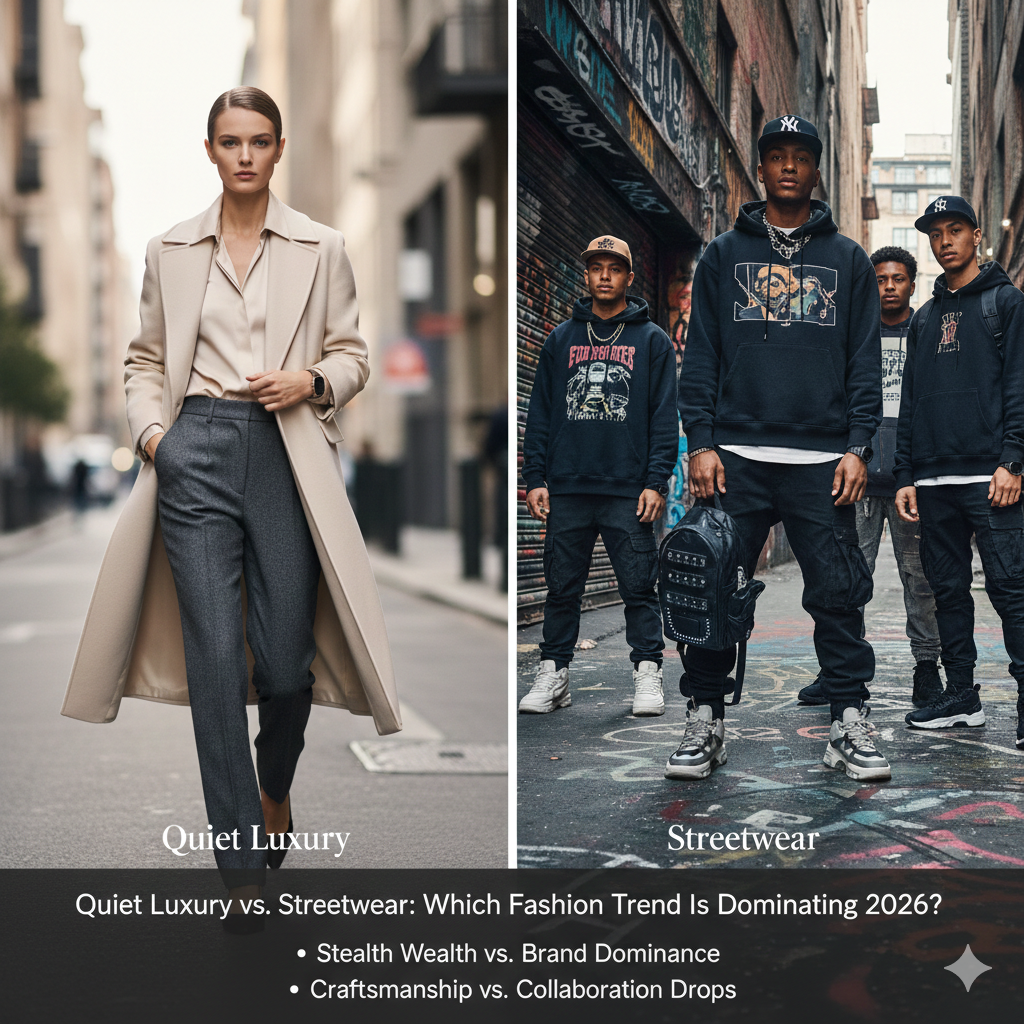
Fashion has always been a pendulum, swinging between excess and restraint. Yet, as we move through 2026, the industry finds itself in a unique position where the pendulum seems to be swinging in two directions at once. On one side, there is the continued dominance of streetwear—a cultural juggernaut rooted in youth identity, hype, and logo-heavy expression. On the other stands quiet luxury—a movement defined by muted tones, unbranded quality, and an “if you know, you know” attitude toward wealth.
For the global fashion enthusiast, these two aesthetics might seem diametrically opposed. One shouts; the other whispers. One relies on the rapid-fire cycle of limited drops; the other leans into the permanence of a capsule wardrobe. However, looking at the streets of New York, Tokyo, and Paris in 2026, it becomes clear that these trends are not just competing; they are reshaping consumer values. Understanding which trend is truly dominating requires looking beyond the runway and into the psychology of the modern shopper.
What Is Quiet Luxury?
Quiet luxury, often referred to as “stealth wealth,” is the antithesis of the logomania that dominated the early 2020s. It is a design ethos that prioritizes intrinsic value over external validation. In 2026, this trend has solidified from a seasonal buzzword into a standard category of dressing.
Minimalist design and timeless aesthetics
At its core, quiet luxury is about minimalism, but not the austere, cold minimalism of the 1990s. Instead, it focuses on softness and ease. The color palettes are neutral—camel, navy, cream, and charcoal. Silhouettes are relaxed but tailored to perfection. The goal is to look effortlessly put together, projecting an air of stability and confidence without needing a brand name to prove it.
Quality over logos and trends
The defining characteristic of this movement is a rigorous focus on materials. Consumers are trading the visual noise of monogrammed prints for the tactile experience of vicuña wool, cashmere, and high-grade silk. The value of the garment lies in how it feels against the skin and how it drapes on the body, rather than the social signal it sends via a logo. It implies that the wearer is secure enough in their status that they don’t need their clothing to shout about it.
What Is Streetwear?
While quiet luxury retreats into subtlety, streetwear remains the vibrant, beating heart of youth culture. Originating from the skate, surf, and hip-hop scenes of California and New York, streetwear has evolved into the dominant vernacular of modern casual fashion.
Origins in urban culture
Streetwear began as a grassroots movement—a uniform for outsiders and subcultures. By 2026, it has fully integrated into the luxury sector, yet it retains its rebellious roots. It challenges traditional notions of what “fashion” is, prioritizing comfort and utility. Hoodies, sneakers, graphic tees, and cargo pants are no longer just loungewear; they are high-fashion staples.
Influence of music, sports, and youth identity
The engine driving streetwear is not just the clothing itself, but the culture surrounding it. It is inextricably linked to music genres like hip-hop and grime, as well as the world of professional sports, particularly basketball and soccer. For the wearer, donning a specific pair of sneakers or a limited-edition jacket is a way of signaling membership to a specific cultural tribe. It is fashion as a community event.
Why These Two Trends Are Dominating 2026
It is rare for two such opposing forces to hold equal weight in the market, but the landscape of 2026 creates the perfect storm for this duality.
Post-pandemic fashion shifts
The global events of the early 2020s fundamentally altered how people dress. The lockdown era instilled a permanent desire for comfort, which fuels the streetwear market. We are simply not willing to wear uncomfortable clothes anymore. However, the re-emergence into social life created a longing for dressing up. Quiet luxury bridges this gap by offering clothes that are polished and formal, yet physically comfortable and unstructured.
Consumer preference for authenticity
Both trends appeal to a growing consumer desire for authenticity, albeit in different ways. Quiet luxury offers authenticity through product integrity and craftsmanship. Streetwear offers authenticity through cultural connection and storytelling. In an era of AI-generated content and mass production, consumers are desperate for things that feel “real,” whether that reality comes from a hand-stitched hem or a connection to a favorite musical artist.
Quiet Luxury vs Streetwear: Key Differences
To understand the market dynamics of 2026, we must distinguish how these categories operate on a business and aesthetic level.
Design Philosophy: Minimalism vs bold expression
Quiet luxury operates on the principle of reduction. Designers strip away the unnecessary, leaving only the essential form. It is consistent and rarely changes drastically from season to season. Streetwear, conversely, thrives on bold expression. It embraces clashing patterns, oversized silhouettes, and irony. It is reactive, often providing commentary on current events or pop culture through graphics and slogans.
Price Perception and Accessibility: Investment pieces vs hype-driven drops
The economic models differ significantly. Quiet luxury frames clothing as a long-term asset. A coat is expensive because it is meant to last twenty years. The price is justified by the “cost per wear.” Streetwear often relies on the “drop” model, creating artificial scarcity to drive up hype and resale value. A t-shirt might be expensive not because of the fabric cost, but because only 500 were made.
Brand Identity and Marketing: Subtle branding vs community-driven culture
Marketing quiet luxury involves a “whisper” strategy. Brands rely on word-of-mouth among elites and understated campaigns that evoke a mood rather than push a product. Streetwear marketing is loud and community-driven. It relies on social media engagement, collaborations, unboxing videos, and the energetic participation of the fanbase.
Consumer Behavior Driving Both Trends
The lines between the consumer bases for these trends are blurrier than one might expect. In 2026, it is rarely an “either/or” choice for shoppers.
Gen Z and Millennials shaping style choices
Gen Z and Millennials are driving the bus. Interestingly, Gen Z—often associated with the chaotic aesthetic of streetwear—has also become a primary consumer of quiet luxury as they enter the workforce and seek to build “adult” wardrobes. They are arguably the most educated generation regarding fabric quality and ethical production, driving demand for the transparency found in quiet luxury.
Social media and influencer impact
Social media algorithms have segregated fashion into niches, allowing both trends to flourish simultaneously. TikTok trends like “Old Money Aesthetic” propelled quiet luxury into the viral stratosphere, democratizing the look for a mass audience. simultaneously, Instagram and niche fashion forums continue to fuel the resale market for sneakers and streetwear grails, keeping the hype cycle alive.
Role of Celebrities and Pop Culture
The faces of these movements have helped codify them in the public imagination.
High-profile endorsements
We see a clear divide in celebrity styling. On one hand, you have tech moguls and legacy actors championing the uniform of plain cashmere and bespoke denim. On the other, musicians and athletes turn NBA tunnel walks into high-stakes streetwear runways. These endorsements validate the trends: one signals power through nonchalance, the other signals power through cultural relevance.
Fashion week influence
Runways in 2026 have become a tale of two cities. Some houses present collections so stripped back they feel like palate cleansers, emphasizing the cut of a lapel or the movement of a trouser. Others present theatrical spectacles where the clothing is secondary to the vibe, heavily influenced by street culture aesthetics.
Streetwear’s Continued Global Growth
Reports of streetwear’s death have been greatly exaggerated. In 2026, it has simply matured and expanded its borders.
Collaborations and limited releases
The collaboration model, pioneered by streetwear, is now the industry standard. However, 2026 sees more unexpected pairings—luxury heritage brands teaming up with niche skate labels, or outdoor gear companies collaborating with high-fashion houses. These limited releases keep the energy of streetwear high, ensuring there is always something “new” to chase.
Digital-first fashion communities
Streetwear has migrated seamlessly into the digital realm. Digital fashion, skins for avatars, and NFT-backed collectables are predominantly styled with a streetwear aesthetic. The “metaverse” of 2026 looks a lot more like a skate park than a boardroom, ensuring that streetwear remains the dominant aesthetic of the digital native.
Quiet Luxury’s Rise in Modern Fashion
While streetwear owns the digital space, quiet luxury is winning the battle for the physical closet, largely due to economic factors.
Capsule wardrobes and timeless styling
The concept of the capsule wardrobe—owning fewer items that all mix and match—is the practical application of quiet luxury. Consumers are tired of decision fatigue. They want a uniform that works for the office, a dinner date, and travel. Quiet luxury provides this versatility in a way streetwear often cannot.
Economic uncertainty influencing minimalism
During periods of economic fluctuation, flaunting wealth becomes gauche. In 2026, as the global economy navigates various corrections, ostentatious displays of designer logos feel out of touch. Quiet luxury allows consumers to enjoy high-quality goods without looking like they are bragging, fitting the somber but hopeful economic mood.
Which Trend Is Leading in 2026?
So, who wins? If we look at volume and cultural buzz, streetwear still holds the crown. It dictates the pace of fashion cycles and dominates social media. However, if we look at the shifting prestige and longevity of purchases, quiet luxury is gaining rapid ground.
Streetwear likely owns the volume market share due to its accessibility and integration into fast fashion. Quiet luxury, however, captures the high-margin, high-value segment. But the real winner is the middle ground.
Coexistence of multiple fashion movements
The most dominating trend of 2026 is actually the mix. The most stylish consumers are wearing a vintage, heavyweight streetwear hoodie under a tailored, unbranded Italian wool coat. They wear rare sneakers with pleated dress trousers. The dominance lies in the styling, not the category.
Sustainability and Longevity in Both Trends
Sustainability is the ultimate litmus test for fashion in 2026.
Quality-focused buying vs resale culture
Quiet luxury argues for sustainability through longevity—buying one sweater for ten years rather than ten sweaters in one year. Streetwear argues for sustainability through circularity. The robust resale market for streetwear means that items are kept in circulation longer, trading hands rather than ending up in landfills. Both have valid claims, but both also face challenges regarding production ethics and supply chain transparency.
Future Outlook for Quiet Luxury and Streetwear
As we look toward the latter half of the decade, the strict definitions will continue to erode.
Hybrid fashion styles emerging
We are entering the era of “Quiet Streetwear” and “Loud Luxury.” We will see hoodies made from vicuña and suits cut with the baggy proportions of 90s skate wear. The formality of luxury is merging with the silhouette of the street.
Evolution beyond traditional categories
Eventually, these labels may vanish entirely. Fashion is moving toward a post-genre state, where the distinction between “high” and “low” culture is irrelevant. The focus will shift entirely to personal curation.
FAQs – Quiet Luxury vs Streetwear
What defines quiet luxury fashion?
Quiet luxury is defined by high-quality materials, neutral color palettes, minimalist designs, and a lack of visible logos. It focuses on understated elegance and investment pieces that transcend seasonal trends.
Is streetwear still popular in 2026?
Yes, streetwear remains incredibly popular. It has evolved from a subculture into a dominant force in global fashion, heavily influencing luxury brands and digital fashion trends.
Which trend is more sustainable?
It depends on the consumer. Quiet luxury promotes buying less and keeping items longer (longevity). Streetwear promotes a circular economy where items are resold and reused (resale). Both are better than fast fashion, provided the items are ethically produced.
Are luxury brands adopting streetwear?
Absolutely. Most major luxury houses now incorporate streetwear elements—such as sneakers, hoodies, and bomber jackets—into their collections to appeal to younger consumers.
Can both trends exist at the same time?
Yes, and they often do within the same outfit. Modern styling encourages mixing high-end, minimalist pieces with casual, hype-driven streetwear items for a personalized look.
The Verdict on Your Closet
In the end, the battle between quiet luxury and streetwear isn’t a zero-sum game. The dominance of one does not require the death of the other. The fashion landscape of 2026 is defined by autonomy. Consumers are no longer dictated to by magazines or runways; they are the curators of their own image.
Whether you lean toward the soft power of a logo-free cashmere coat or the expressive energy of a limited-edition sneaker, the “winning” trend is the one that makes you feel most like yourself. The smartest wardrobes of 2026 will likely include a healthy dose of both, proving that in the modern world, you don’t have to choose between comfort, clout, and class.


