
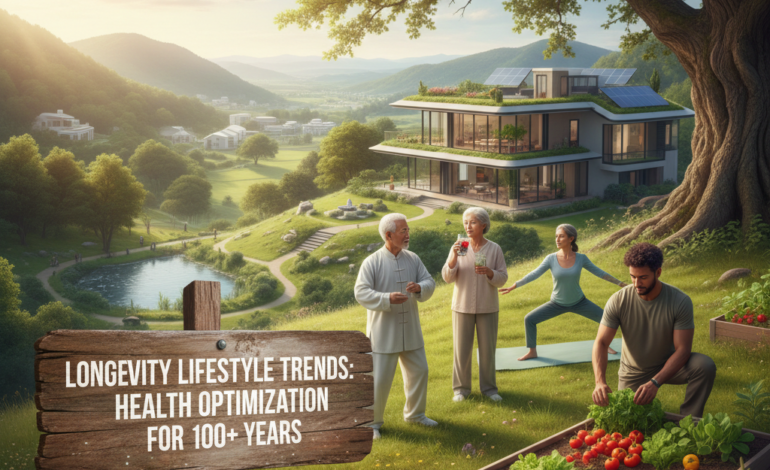
Longevity Lifestyle Trends: How People Are Optimizing Health for 100+ Years

Most of us have probably asked ourselves at some point: What if I live to be 100? A few decades ago, hitting the century mark was a rare anomaly. Today, it is becoming an increasingly plausible reality for many. But the conversation has shifted. It is no longer just about adding years to life; it is about adding life to those years.
We are seeing a global shift away from reactive healthcare—fixing things only when they break—toward a proactive “longevity lifestyle.” This isn’t about chasing immortality or looking twenty forever. Instead, it is a holistic approach to living that prioritizes span of health (healthspan) alongside span of life (lifespan).
Across the world, people are rethinking how they eat, move, sleep, and connect, all with the goal of functioning optimally well into their 90s and beyond. From the data-driven executive in Silicon Valley to the community-focused gardener in Sardinia, the pursuit of longevity is reshaping our daily habits. Let’s explore what this movement entails and how you can apply these principles to your own life.
What Is the Longevity Lifestyle Movement?
The longevity lifestyle movement is defined by a series of daily choices designed to optimize long-term health and biological function. Unlike short-term diets or fitness challenges, this is a permanent operating system for life. It combines ancient wisdom—like the importance of community and whole foods—with modern scientific insights into how our cells age.
It is important to distinguish this from the “anti-aging” industry. Anti-aging often focuses on aesthetics: erasing wrinkles, dyeing gray hair, or surgically altering appearance to look younger. Longevity, by contrast, focuses on internal biology. A proponent of the longevity lifestyle might not care about gray hair, but they care deeply about their grip strength, their cognitive sharpness, and their metabolic health. It is about resilience, not vanity.
Why Longevity Trends Are Growing in 2026
Several factors are converging to make longevity a central theme in modern wellness. First, we are witnessing a massive cultural shift toward preventive health awareness. The global experience of the 2020s highlighted the importance of metabolic health and immune resilience. People are no longer content to wait for a diagnosis; they want to prevent disease before it starts.
Second, technology has democratized health data. In the past, you needed a doctor’s appointment to know your heart rate variability or sleep quality. Now, that information is on your wrist. This feedback loop allows individuals to see exactly how a glass of wine affects their sleep or how a morning walk lowers their stress levels. Seeing the data makes the abstract concept of “health” tangible and actionable.
Core Lifestyle Habits Driving Longevity
While technology helps, the foundation of longevity is built on four surprisingly low-tech pillars. These are the non-negotiables that emerging science and centenarian studies agree on.
Nutrition and Whole Food Eating
Food is information for our cells. The longevity approach moves away from restrictive calorie counting and toward nutrient density. The goal is to provide the body with the raw materials it needs for repair. This generally looks like a diet rich in vegetables, fruits, legumes, nuts, and healthy fats.
It’s less about “low carb” or “low fat” and more about “low processing.” Ultra-processed foods are increasingly viewed as biological disruptors. A longevity-focused meal might be a lentil stew with olive oil and dark leafy greens—simple, affordable, and chemically complex in a way that supports cellular health.
Functional Fitness and Daily Movement
If you look at the Blue Zones—regions where people live the longest—you rarely see people pumping iron in a gym for an hour. Instead, you see constant, low-level movement throughout the day. They garden, walk to neighbors’ houses, and do manual chores.
Modern longevity trends mimic this through “functional fitness.” This prioritizes movements that mimic real life: squatting (sitting down and getting up), carrying heavy loads (groceries), and balancing. Strength training is crucial, not for bodybuilding, but to prevent sarcopenia (muscle loss) and protect bone density as we age. Mobility work ensures you can tie your shoes at 90, while endurance training keeps the heart efficient.
Sleep Optimization
For years, “hustle culture” told us that sleep was for the weak. Longevity science tells us sleep is for the wise. During deep sleep and REM cycles, the brain clears out metabolic waste products (like beta-amyloid, linked to Alzheimer’s) and the body repairs tissues.
The new trend is treating sleep with the same discipline as a workout. This involves sleep hygiene: cooling down the room, blocking out light, and maintaining a consistent rhythm. It is widely accepted now that you cannot “hack” your way out of sleep deprivation; recovery is where the magic happens.
Stress Management and Mental Wellness
Chronic stress is inflammatory. Elevated cortisol levels over decades can damage arteries and shrink the brain’s hippocampus. Therefore, stress management isn’t a luxury; it’s a physiological necessity.
This includes practices like mindfulness, meditation, and breathwork, but it also includes setting boundaries. Emotional resilience—the ability to bounce back from life’s inevitable hardships—is a key trait of super-agers. Viewing stress as a challenge rather than a threat changes the body’s hormonal response to it.
Role of Technology in Longevity Lifestyles
Technology acts as the dashboard for the longevity vehicle. We are moving past basic step counting into sophisticated biometric monitoring. Wearables now track Heart Rate Variability (HRV), blood oxygen, and continuous glucose levels.
This data allows for hyper-personalization. For example, one person might see their blood sugar spike after eating a banana, while another person doesn’t. Technology takes the guesswork out of wellness. Instead of following generic advice, you follow your own data. Smart scales, sleep rings, and metabolic breath analyzers are becoming standard tools in the longevity toolkit, helping people make micro-adjustments to their habits in real-time.
Longevity Diet Trends Around the World
While nutrition is personalized, certain global patterns consistently yield better health outcomes.
Mediterranean-Style Eating
The Mediterranean diet remains the gold standard in longevity research. It is characterized by high consumption of olive oil, fish, vegetables, and whole grains, with moderate wine and limited red meat. It is rich in omega-3 fatty acids and antioxidants, which fight inflammation.
Plant-Forward Nutrition
Whether it is the tofu-rich diet of Okinawa, Japan, or the bean-heavy diet of Nicoya, Costa Rica, longevity hotspots lean heavily on plants. “Plant-forward” doesn’t necessarily mean strictly vegan. It means the plate is center-stage vegetables, with meat acting as a condiment or side dish rather than the main event. This increases fiber intake, which feeds the gut microbiome—a crucial component of immune health.
Preventive Healthcare and Regular Screening
The longevity lifestyle shifts the medical model from “sick care” to true healthcare. This involves proactive, comprehensive screening. Rather than just checking cholesterol once a year, longevity proponents might look at advanced lipid particles, inflammation markers (like hs-CRP), and hormone panels.
Early detection is the ultimate life extension tool. Catching a metabolic issue when it is pre-diabetic is infinitely easier to manage than treating full-blown diabetes. This trend also includes genetic testing to understand individual risk factors, allowing people to tailor their lifestyle to their DNA.
Social Connection and Purpose in Long-Term Health
Perhaps the most overlooked factor in longevity is the most human one: connection. Loneliness carries a mortality risk comparable to smoking 15 cigarettes a day. Humans are wired for tribe.
In longevity cultures, elders are integrated into the community, not isolated. They have a reason to get up in the morning—a concept the Japanese call ikigai (reason for being). This sense of purpose and belonging lowers stress hormones and boosts immune function. Prioritizing family dinners, joining clubs, or volunteering are just as important for your arteries as eating kale.
Challenges and Criticism of Longevity Culture
As with any movement, there are pitfalls. The “wellness pressure” to optimize every breath, bite, and minute of sleep can become a source of stress itself—ironically counteracting the benefits. This is sometimes called orthosomnia (an unhealthy obsession with perfect sleep) or orthorexia (an obsession with “clean” eating).
There is also a valid critique regarding accessibility. High-end supplements, continuous glucose monitors, and organic food delivery services are expensive. There is a risk that extreme longevity becomes a luxury good, available only to the wealthy, widening existing health disparities.
Longevity Lifestyle vs Biohacking
While they overlap, there is a distinct difference in philosophy between a longevity lifestyle and “biohacking.”
Biohacking often involves experimentation, sometimes extreme, to “hack” the system for superhuman performance. It might involve taking off-label pharmaceuticals, cold plunging for extended periods, or rigorous fasting protocols.
The longevity lifestyle is generally softer and more sustainable. It focuses on habits you can maintain for fifty years. It is about consistency over intensity. While a biohacker might take 50 supplements a day, a longevity practitioner focuses on getting nutrients from a diverse diet and getting to bed on time.
Future Outlook for Longevity Trends
The future of longevity is integration. We will likely see a blending of lifestyle and medicine, where your doctor prescribes a sleep protocol as readily as a pill. Personalized health strategies will become the norm, powered by AI that analyzes your genetic, blood, and lifestyle data to give you a custom roadmap.
Ultimately, the goal is to compress morbidity—to shorten the time we spend sick at the end of our lives. We want to be hiking, thinking, and loving right up until the very end.
FAQs – Longevity Lifestyle Trends
What is a longevity lifestyle?
A longevity lifestyle is a set of daily habits focused on nutrition, movement, sleep, and stress management, designed to extend the number of healthy years a person lives.
Can lifestyle habits really extend lifespan?
Yes. Studies suggest that genetics account for only about 20-30% of lifespan, while lifestyle and environmental factors determine the rest.
What are the most important longevity habits?
The consensus points to regular physical activity, a plant-rich diet, adequate sleep, stress management, and strong social connections.
Is longevity only about diet and exercise?
No. Social connection, a sense of purpose (ikigai), and sleep quality are equally critical components of living a long, healthy life.
Are longevity trends science-based?
Many are rooted in rigorous science (like the benefits of sleep and exercise), though some emerging trends (like specific supplements) may have less conclusive data backing them.