


Economic stability is rarely permanent. Just as night follows day, periods of economic expansion are inevitably followed by contractions. For investors and financial observers, the question is rarely if a recession will happen, but when. As we look toward 2026, conversations among market analysts and economists are shifting from immediate recovery to long-term sustainability.
While the global economy has shown resilience in recent years, specific structural cracks often take time to widen into visible chasms. Monitoring these potential fracture points is essential for anyone managing a portfolio or running a business. A recession doesn’t always announce itself with a sudden crash; often, it arrives after a series of subtle warning signals that were dismissed as temporary noise.
This analysis explores the macroeconomic indicators, policy decisions, and market behaviors that could define the economic landscape of 2026. By understanding the mechanics behind these warning signs, investors can move beyond headlines and grasp the fundamental drivers of global economic health.
What Is a Global Recession?
To understand the risks of 2026, we first need a clear definition of what we are watching for. A global recession is more than just a bad week on the stock market or a month of slow sales. It is a synchronized downturn in economic activity across major world economies.
Definition and Economic Cycles
Technically, many economists define a recession as two consecutive quarters of negative Gross Domestic Product (GDP) growth. However, a global recession is more complex because not every country reports data the same way or at the same time. The International Monetary Fund (IMF) and World Bank look for a decline in annual per capita world real GDP, accompanied by a weakening of other key macroeconomic indicators such as industrial production, trade, capital flows, and employment.
Economic cycles typically move through four phases: expansion, peak, contraction, and trough. If the global economy enters a contraction phase in 2026, it would mean the cycle of expansion has exhausted itself, leading to a period of correction.
Difference Between Slowdown and Recession
It is vital to distinguish between a slowdown and a recession. A slowdown (or “soft landing”) occurs when growth decelerates but remains positive. The economy cools down, inflation drops, but unemployment remains manageable. A recession involves actual shrinkage. Factories produce less, consumers buy less, and the overall size of the economy gets smaller. Investors fear recessions far more than slowdowns because recessions typically bring sharp declines in corporate profits and asset values.
Why Investors Are Watching 2026 Closely
The focus on 2026 isn’t arbitrary. It stems from the lag effects of economic policies enacted in previous years and the natural lifespan of the current business cycle.
Interest Rate Trends
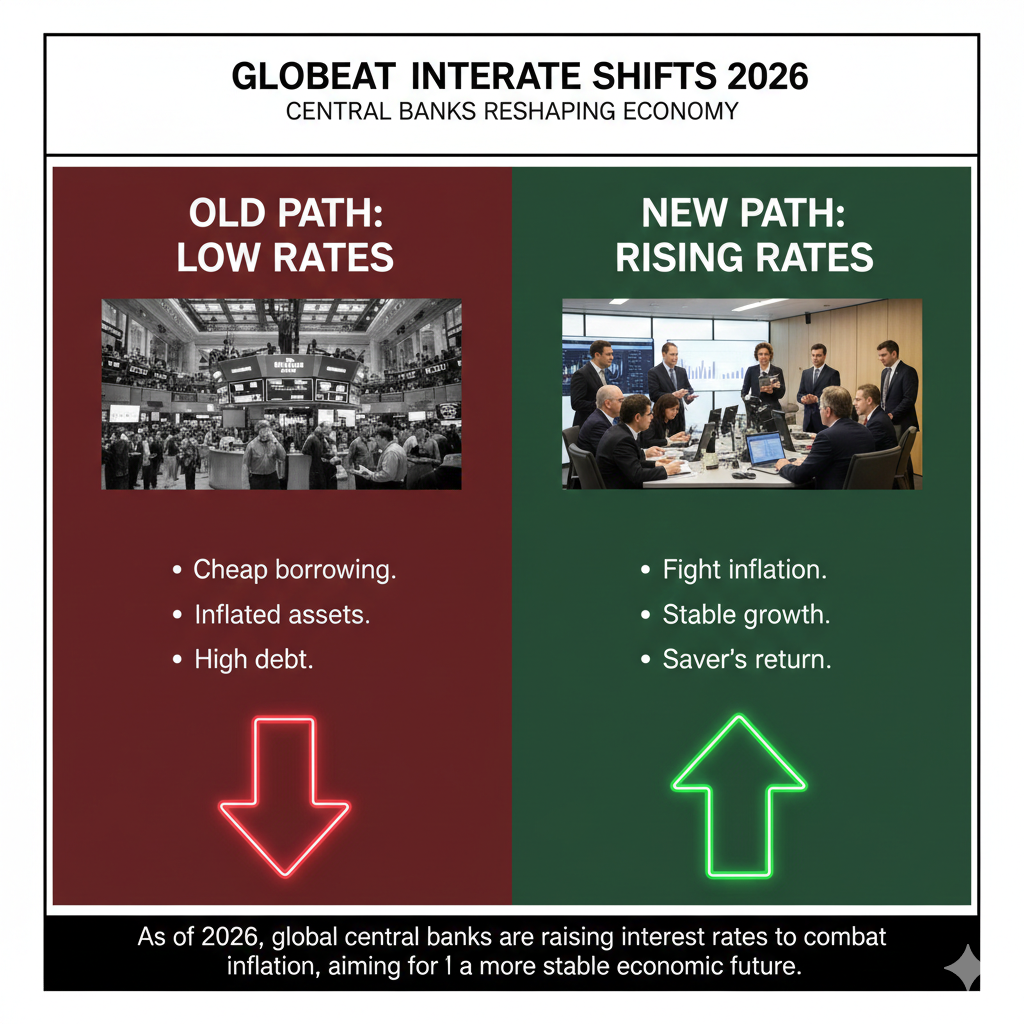
Central banks worldwide spent much of the early 2020s fighting inflation with aggressive interest rate hikes. The effects of monetary policy are never immediate; they work with a “long and variable lag,” often taking 12 to 24 months to fully filter through the economy. By 2026, the full weight of sustained borrowing costs will have been felt by businesses and households. If rates remain elevated to keep inflation in check, the cumulative stress could begin to fracture economic growth.
Slowing Global Growth Concerns
Even without a crisis, the engine of global growth is showing signs of fatigue. Major economies that traditionally drive expansion are facing structural headwinds. Demographics in developed nations are shifting toward older populations who spend less, while productivity gains have struggled to keep pace with debt accumulation. Investors are watching 2026 as a potential tipping point where this slow erosion of growth momentum could stall completely.
Key Warning Signs of a Potential Recession
Financial markets are essentially giant information processing machines. They constantly price in future risks. When searching for a recession, seasoned investors look at specific “dashboard indicators.”
Yield Curve Signals
Perhaps the most famous predictor of economic downturns is the yield curve in the bond market.
Bond Market Expectations
In a healthy economy, long-term bonds yield higher interest rates than short-term bonds. This makes sense: if you lend money to the government for 10 years, you expect a higher return than if you lend it for two years because you are locking up your cash for longer. When the yield curve “inverts”—meaning short-term rates pay more than long-term rates—it signals trouble. It means investors are nervous about the near future and expect growth (and interest rates) to fall later on. If the yield curve remains inverted leading into 2026, it is a flashing red light for recession risk.
Persistent Inflation or Rapid Disinflation
Price stability is the bedrock of a predictable economy. Both extremes pose a threat.
Price Stability Challenges
If inflation remains stubbornly high into 2026, central banks cannot cut interest rates to save a struggling economy, leaving them with few tools to fight a downturn. Conversely, rapid disinflation (prices falling too fast) can signal that demand has collapsed. If consumers stop buying because they are tapped out, companies lose pricing power, leading to a deflationary spiral that is often harder to fix than inflation.
Rising Unemployment Trends
The labor market is often the last domino to fall. Companies try to hold onto workers as long as possible.
Labor Market Softening
Investors watch the “Sahm Rule,” an indicator that triggers when the three-month moving average of the national unemployment rate rises by 0.50 percentage points or more relative to its low during the previous 12 months. A gradual uptick in unemployment claims or a freeze in hiring often precedes the actual job losses. If 2026 sees a consistent drift upward in unemployment, it suggests the consumer base is losing its income stability.
Weak Corporate Earnings
Stock prices are ultimately driven by how much profit companies generate.
Profit Margins and Forecasts
During a boom, companies can pass higher costs onto customers. As a recession approaches, this ability fades. Revenue may stay flat, but costs (wages, materials, debt servicing) remain high, squeezing profit margins. If major corporations begin lowering their earnings guidance for 2026, citing “weak demand” or “macroeconomic headwinds,” it is a direct signal that the business environment is deteriorating.
Declining Consumer Spending
In many developed economies, consumer spending makes up 60% to 70% of GDP.
Retail and Service Sector Data
When people feel wealthy and secure, they buy houses, cars, and vacations. When they are worried, they pull back to essentials like food and utilities. A sustained drop in retail sales or a shift toward discount retailers indicates that the average household is under pressure. If credit card delinquency rates rise simultaneously, it suggests the consumer engine is running out of fuel.
Central Bank Policies and Recession Risk
Central banks, like the Federal Reserve in the U.S. or the European Central Bank, act as the economy’s brake and accelerator.
Rate Hikes vs. Rate Cuts
The delicate dance of 2026 will revolve around timing. If central banks cut rates too early, inflation could roar back. If they wait too long, they might suffocate the economy. A recession often occurs when central banks are forced to keep the “brake” (high interest rates) pressed down for too long to ensure inflation is dead, inadvertently causing a crash in investment and consumption.
Monetary Tightening Effects
Quantitative tightening—the process where central banks sell off assets to reduce the money supply—removes liquidity from the financial system. This makes money harder to get. For businesses relying on cheap loans to operate, this tightening can be lethal. By 2026, the cumulative effect of years of tighter money could expose “zombie companies” that were only surviving due to low rates, leading to defaults that ripple through the economy.
Global Market Indicators Investors Track
Beyond government data, the markets themselves offer clues through price action.
Equity Volatility
The VIX, often called the “fear gauge,” measures expected volatility in the stock market. A sudden, sustained spike in volatility suggests investors are paying high premiums to protect their portfolios against a crash. It indicates uncertainty has overtaken confidence.
Commodity Prices
Commodities are raw materials used to build the global economy. Copper, for instance, is often called “Doctor Copper” because it has a PhD in economics; its price rises when construction and manufacturing are booming and falls when they stall. A significant drop in oil and industrial metal prices leading into 2026 would suggest that global manufacturing is contracting.
Currency Movements
The U.S. dollar typically acts as a safe haven. In times of global economic stress, investors sell risky assets and buy dollars. A rapidly strengthening dollar can actually worsen a global recession, as it makes debt more expensive for emerging markets that borrowed in dollars, creating a feedback loop of financial stress.
Regional Economic Risks
A global recession is rarely uniform. Different regions face unique vulnerabilities that can trigger a worldwide event.
U.S., Europe, and Asia Outlooks
The U.S. economy relies heavily on the consumer. If American spending cracks, the world loses its biggest customer. Europe faces challenges regarding energy security and industrial competitiveness. If Germany’s manufacturing sector stalls, it drags the Eurozone down. In Asia, the transition of China from an infrastructure-led economy to a consumption-led one has been bumpy. Slow growth in the world’s second-largest economy dampens demand for commodities and exports worldwide.
Emerging Market Vulnerabilities
Emerging markets are often the “canary in the coal mine.” They are more sensitive to interest rate changes and currency fluctuations. If countries in South America or Southeast Asia begin defaulting on sovereign debt or facing currency crises in 2026, it often signals a retreat of global liquidity that will eventually hit developed markets.
How Recession Fears Affect Financial Markets
Understanding the warning signs helps explain market behavior. Markets do not wait for the recession to be official; they react to the fear of it.
Stock Market Corrections
Equities generally perform poorly leading up to a recession. Investors rotate out of “growth” stocks (companies expected to grow profits in the future) and into “value” or “defensive” stocks (companies that sell essentials like toothpaste or electricity). A broad decline in major indices is the market pricing in lower future earnings.
Bond Demand and Safe-Haven Assets
As stocks fall, money often flees to safety. Government bonds are viewed as secure, so demand for them rises, pushing their yields down. Gold also typically sees increased interest as a store of value that isn’t tied to the performance of a specific economy or currency.
Sectors Most Sensitive to Recession Risks
Not all companies suffer equally. Some are naturally more insulated than others.
Technology and Growth Stocks
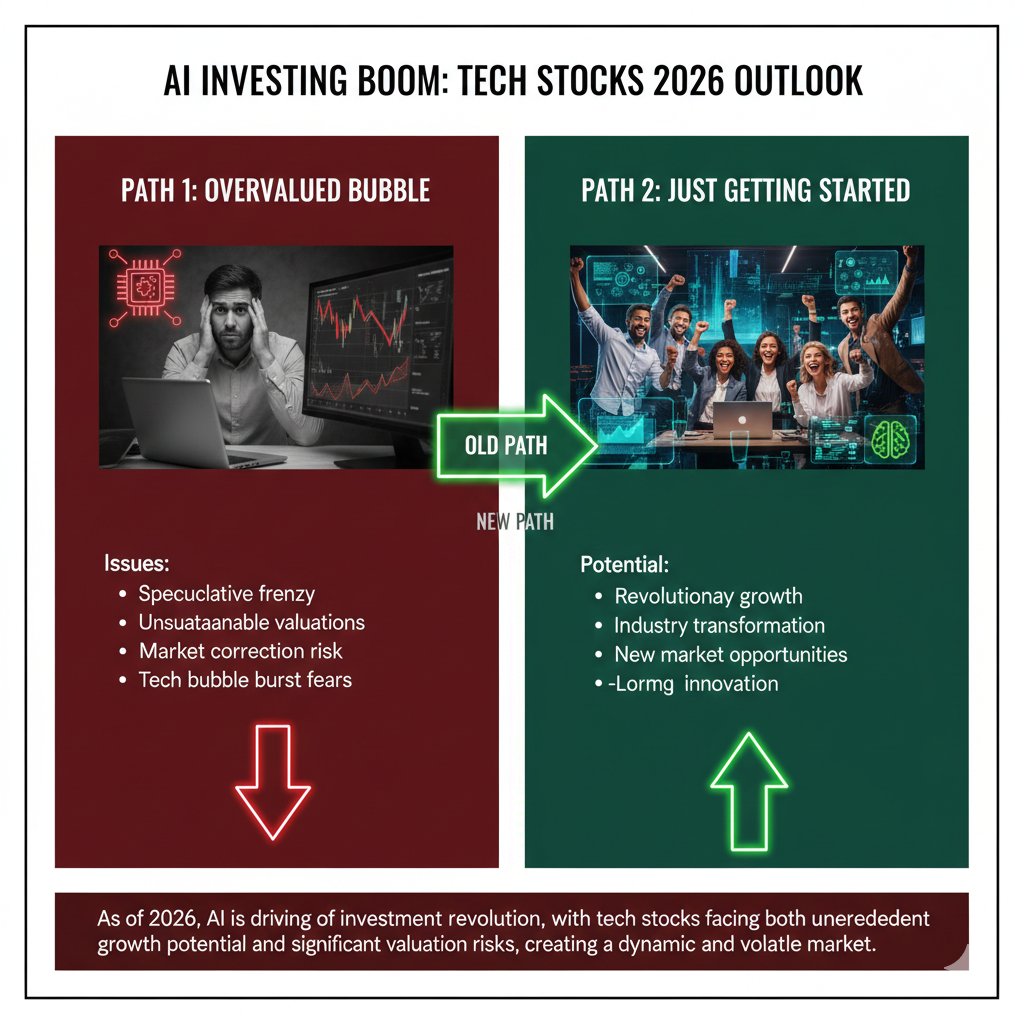
Tech companies often rely on borrowing money to fund rapid expansion. When a recession looms and rates are high, that money becomes expensive. Furthermore, tech spending is often discretionary for businesses. If a company is cutting costs, it might delay a software upgrade, hitting tech revenues hard.
Real Estate and Consumer Discretionary
Real estate is highly sensitive to interest rates. If mortgages are expensive and people are worried about jobs, home sales freeze. Similarly, the consumer discretionary sector—hotels, luxury goods, restaurants—suffers immediately when households tighten their belts. Watching these sectors underperform the broader market is a classic warning sign.
Lessons from Past Recession Cycles
History doesn’t repeat itself perfectly, but it rhymes.
Historical Indicators
In 2008, the warning sign was a housing bubble and excessive leverage. In 2000, it was inflated tech valuations. In 2026, the risk may stem from corporate debt walls or geopolitical fragmentation. However, the sequence remains similar: the yield curve inverts, central banks tighten policy, manufacturing orders drop, and finally, employment falls.
Investor Behavior Patterns
In every cycle, there is a phase of denial. Investors often believe “this time is different” and that the economy has reached a permanently high plateau. Recognizing this behavioral bias is crucial. The crowd is often most bullish right before the peak and most bearish right before the recovery.
What Investors Should Watch Moving Forward
Vigilance is the best strategy.
Economic Data Releases
Key reports to mark on the calendar include GDP revisions, monthly jobs reports (Non-Farm Payrolls in the US), and Consumer Price Index (CPI) updates. These provide the hard data needed to verify if a slowdown is turning into a contraction.
Policy Guidance from Central Banks
Listen to what central bankers say, not just what they do. “Forward guidance”—the hints they drop about future moves—can tell you if they are seeing cracks in the economy that aren’t yet visible in the public data.
Is a Recession Inevitable in 2026?
Economic forecasting is a game of probabilities, not certainties.
Conflicting Economic Signals
There is always a bull case and a bear case. It is possible that productivity improvements from technology (like AI) could boost growth enough to offset high interest rates. It is also possible that inflation fades naturally, allowing central banks to cut rates and engineer a soft landing.
Balanced Perspectives
A recession in 2026 is a risk, not a guarantee. The warning signs listed above are yellow lights, not red ones. They suggest caution, diversification, and careful risk management. They do not necessarily demand a complete exit from the markets. The most successful investors remain adaptable, adjusting their strategies as the data evolves rather than betting the house on a single outcome.
FAQs – Global Recession Watch 2026
What are early signs of a recession?
The earliest signs usually appear in financial markets and sentiment before hitting the “real” economy. Watch for an inverted yield curve, a drop in manufacturing purchasing manager indices (PMIs) below 50, and a decline in consumer confidence surveys. Housing market slowdowns are also a leading indicator.
How do interest rates signal recession risk?
High interest rates are designed to slow the economy down to fight inflation. If they remain high for a long period, they increase the cost of doing business and buying homes. When the central bank raises rates rapidly, it historically increases the probability of a recession occurring 12 to 18 months later.
Which markets react first to recession fears?
Typically, the bond market reacts first (yields drop as investors seek safety), followed by the stock market (growth stocks sell off). Commodities like oil often drop as traders anticipate lower demand from factories and transport.
Can investors prepare without panic?
Yes. Preparation involves diversification. This means holding a mix of assets—stocks, bonds, cash, and perhaps commodities. Reducing high-interest personal debt and maintaining an emergency fund are the best personal finance moves to make before a recession hits.
How often do global recessions occur?
Global recessions are relatively rare compared to national recessions. Since World War II, there have been four widely recognized global recessions: 1975, 1982, 1991, and 2009 (plus the short COVID-19 shock in 2020). They typically occur once every decade or so, though the timeline varies based on global events.