
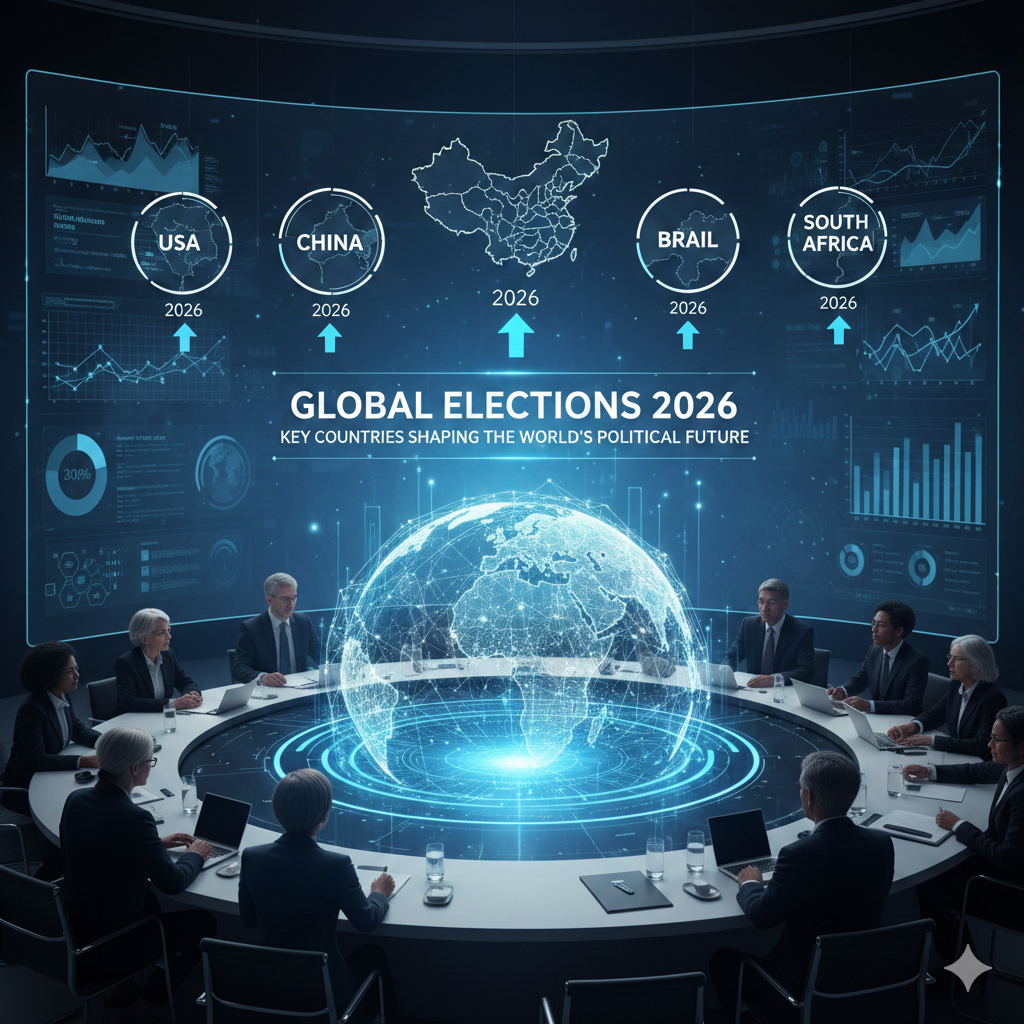
Global Elections 2026: Key Countries Shaping the World’s Political Future
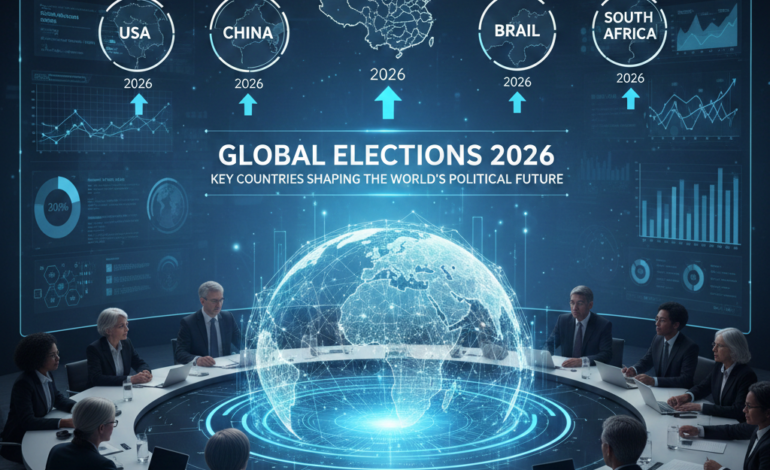

Democratic processes are the gears that turn the machine of international relations. While elections are often viewed through a domestic lens—focusing on local taxes, healthcare, or infrastructure—the collective outcome of voters heading to the polls in 2026 will resonate far beyond national borders. As major economies and strategic geopolitical players prepare to choose their leadership, the results will shape trade alliances, climate commitments, and global security architectures.
The political landscape of 2026 is set against a backdrop of rapid technological advancement and lingering economic volatility. Nations are grappling with the integration of artificial intelligence into the workforce, the urgent realities of the green energy transition, and shifting supply chains. When voters cast their ballots, they are effectively choosing how their countries will navigate these complex, transnational challenges.
For observers of global affairs, 2026 is not just a calendar year of isolated political events; it is a stress test for democratic institutions and a pivot point for international policy. Understanding the nuances of these upcoming elections is essential for investors, policymakers, and global citizens alike. This analysis examines the key regions involved, the dominant themes driving voter sentiment, and the potential ripple effects on the world stage.
Why Global Elections in 2026 Matter
The significance of the 2026 electoral cycle lies in the synchronization of political, economic, and security interests. In an increasingly multipolar world, a leadership change in one region can disrupt the balance of power in another. Political cycles are no longer contained events; they are dominoes in a global chain.
Political cycles and global influence
We are witnessing a period where the longevity of international agreements is often tested by short-term electoral cycles. Treaties regarding nuclear proliferation, defense spending, and carbon emissions are increasingly subject to review by incoming administrations. The elections in 2026 will determine whether current diplomatic trajectories are reinforced or abandoned for new, potentially isolationist or divergent paths.
Economic and geopolitical impact
Markets hate uncertainty, and election years are defined by it. The prospect of shifting tax codes, tariff regimes, and regulatory environments prompts businesses to pause investment and governments to delay strategic initiatives. Furthermore, the geopolitical alignment of key nations will determine the strength of blocs like the G20, NATO, and BRICS. A shift toward populism in a major economy, for example, could stall trade liberalization efforts or complicate coordinated responses to international crises.
Key Countries Holding Major Elections
While local council and municipal elections occur annually, 2026 features pivotal contests in regions that hold outsized influence over the global economy and security landscape.
North America
In the United States, the 2026 midterms will act as a decisive referendum on the sitting administration. While not a presidential election, midterms determine control of Congress, which directly impacts the executive branch’s ability to pass legislation, ratify treaties, and allocate foreign aid.
Policy shifts and global alliances
The composition of the U.S. Congress will dictate the country’s fiscal policy and its appetite for international engagement. A divided government often leads to legislative gridlock, potentially stalling funding for international defense partners or climate initiatives. Conversely, a unified government could accelerate significant shifts in trade protectionism or industrial policy, affecting neighbors like Canada and Mexico through the USMCA framework.
Europe
Europe remains a patchwork of shifting coalitions. By 2026, several nations will likely face scheduled or snap parliamentary elections. The focus here remains on the tension between establishment parties and rising Euro-skeptic factions.
Economic and security priorities
European voters are increasingly prioritizing migration control and energy independence. Elections in this region will likely hinge on which parties offer the most robust solutions to the cost-of-living crisis while maintaining security on the continent’s eastern flank. The outcomes will signal the European Union’s future cohesiveness regarding sanctions regimes and defense spending targets.
Asia-Pacific
The Asia-Pacific region remains a dynamic engine of global growth. Elections here are often centered on development goals and navigating the strategic rivalry between superpowers.
Regional power dynamics
Voters in this region are scrutinized for their stance on maritime security and trade integration. Leadership changes can lead to pivots in foreign policy, moving nations closer to or further from specific trade blocs. Stability in this region is crucial for global supply chains, particularly in the semiconductor and technology manufacturing sectors.
Emerging Markets
Perhaps the most consequential elections of 2026 will occur in the Global South, particularly in Latin America, where Brazil is scheduled to hold general elections.
Political stability and growth outlook
As the largest economy in Latin America, Brazil’s presidential election will be a bellwether for the region. The choice between left-leaning continuity or a return to conservative governance will impact the management of the Amazon rainforest—a critical global climate asset—and the direction of commodity markets. Stability in emerging markets is vital for attracting foreign direct investment (FDI), and the peaceful transfer of power is the primary metric investors watch.
How Elections Influence Global Markets and Policy
The intersection of ballot boxes and stock tickers is undeniable. Financial institutions and multinational corporations spend considerable resources modeling election outcomes to hedge against risk.
Trade agreements and international cooperation
New administrations often review existing trade deals to fulfill campaign promises of protecting local industries. In 2026, we may see a rise in “economic nationalism,” where candidates promise to erect non-tariff barriers or repatriate supply chains. This can lead to the renegotiation of free trade agreements, altering the flow of goods and services.
Currency and economic policy effects
Central bank independence is a cornerstone of modern economics, yet fiscal policy—controlled by elected officials—heavily influences inflation and currency strength. If an incoming government promises expansive spending without revenue offsets, bond markets may react negatively, leading to currency devaluation. Conversely, austerity-focused platforms might strengthen a currency but slow short-term growth.
Major Issues Driving Voter Decisions in 2026
While local nuances exist, three macro-trends are likely to dominate the debate stage across most democratic nations in 2026.
Economy and inflation
The “pocketbook” vote remains the strongest predictor of electoral success. Even as inflation rates stabilize, the cumulative effect of high prices on housing and essentials continues to squeeze the middle class. Candidates who can articulate a credible path to affordability without triggering a recession will have a distinct advantage.
Technology regulation
By 2026, artificial intelligence will be deeply embedded in daily life. Voters and workers are increasingly concerned about job displacement, algorithmic bias, and data privacy. Parties will need to present clear frameworks for regulating big tech, balancing the need for innovation with the protection of labor rights and civil liberties.
Climate policy and energy
The debate is no longer about whether climate change is real, but who pays for the transition. Voters are torn between the necessity of green policies and the immediate costs of energy transition. Elections will likely be fought over carbon taxes, subsidies for electric vehicles, and the future of nuclear energy.
Role of Social Media and Digital Campaigning
The methodology of campaigning has evolved from door-knocking to data mining. In 2026, the digital battleground will be more sophisticated than ever.
Online messaging strategies
Campaigns now utilize hyper-targeted messaging, delivering different promises to different demographics within the same jurisdiction. This fragmentation can energize specific voter bases but often makes governing difficult, as the electorate has voted for disparate, sometimes contradictory, versions of a candidate.
Influence on public opinion
The speed at which narratives spread online means that perception often overtakes reality. Short-form video content and influencer partnerships have become primary news sources for younger demographics. Consequently, political success in 2026 will depend heavily on “virality” and the ability to control the digital narrative in real-time.
Global Political Trends to Watch
Looking at the broader trajectory of political sentiment, 2026 will likely continue several trends observed in the early 2020s.
Populism vs centrist movements
The divide between anti-establishment populism and traditional centrism continues to widen. Populist movements often capitalize on dissatisfaction with globalization, while centrist movements argue for stability and institutional reform. The victory of one over the other in key G20 nations will set the tone for global diplomatic discourse.
Coalition governments and shifting alliances
As electorates fracture, decisive majority governments are becoming rarer. We are entering an era of coalition building, where smaller fringe parties act as kingmakers. This often leads to policy dilution, where radical campaign promises are tempered by the need for compromise, resulting in governance that is slower but potentially more representative.
Impact of Elections on International Relations
Diplomacy is interpersonal. The chemistry—or lack thereof—between heads of state drives international relations.
Diplomatic strategy changes
A new leader brings a new cabinet and a new diplomatic corps. This turnover can reset strained relationships or cool warm ones. For example, a shift in leadership in a key European nation could alter the bloc’s consensus on relations with China or involvement in Middle Eastern affairs.
Defense and security partnerships
Defense pacts rely on continuity. Long-term procurement projects, such as the purchase of fighter jets or naval vessels, span decades. Electoral turnover can jeopardize these contracts if a new administration prioritizes social spending over defense, potentially straining alliances like NATO or AUKUS.
Challenges Facing Modern Elections
The mechanism of voting itself faces scrutiny. Ensuring free, fair, and accepted elections is a growing challenge for democracies worldwide.
Disinformation concerns
The proliferation of AI-generated content (deepfakes) poses a significant risk to election integrity. The ability to manufacture realistic audio or video of candidates saying things they never said creates “epistemic chaos,” where voters struggle to discern truth from fiction.
Voter turnout and trust in institutions
Apathy is a silent threat to democracy. If voters believe that elections do not result in tangible change, turnout declines, leading to governments with weak mandates. Restoring faith in public institutions is a central challenge for candidates in 2026.
How Businesses and Investors Monitor Elections
For the private sector, elections are risk events that must be managed.
Policy uncertainty
Corporate strategy relies on predictability. When election outcomes are too close to call, businesses often delay hiring or expansion. Scenario planning becomes a critical function, with companies stress-testing their business models against various political outcomes.
Regulatory and trade implications
Multinational corporations must monitor the regulatory horizon. A change in government can lead to abrupt shifts in antitrust enforcement, environmental compliance standards, or labor laws. Investors watch these trends to identify sectors that may face headwinds (e.g., fossil fuels under a green government) or tailwinds (e.g., construction under an infrastructure-focused government).
What Global Elections Mean for the Future
The elections of 2026 are not an endpoint but a gateway to the latter half of the decade.
Long-term geopolitical trends
The leaders chosen in this cycle will likely be in power as the world approaches the 2030 deadlines for various sustainable development goals. Their commitment—or lack thereof—will determine whether these global targets are met.
Policy continuity vs change
Ultimately, these elections will answer a fundamental question: Are voters seeking a radical overhaul of the current system, or do they prefer incremental reform? The answer will define the geopolitical stability of the coming decade.
FAQs – Global Elections 2026
Why are 2026 elections important globally?
They serve as a litmus test for the direction of major economies regarding climate change, trade protectionism, and international security alliances, influencing policy well into the 2030s.
Which regions could influence global politics most?
While all elections matter, contests in North America (US Midterms) and South America (Brazil) hold particular weight due to their impact on global markets, environmental policy, and legislative momentum.
How do elections impact markets?
Elections introduce volatility. Markets generally react to the uncertainty of policy changes regarding taxes, regulations, and spending. Once a result is clear, markets typically stabilize as investors adjust to the new reality.
Do global elections affect international trade?
Yes. Incoming governments often have the authority to impose tariffs, withdraw from trade pacts, or offer subsidies to domestic industries, all of which alter global trade flows.
What trends are shaping modern political campaigns?
The rise of AI in content creation, the fragmentation of traditional media, and a shift toward coalition governments are key trends defining the modern political landscape.