


Bitcoin, Ethereum & Beyond: Is 2026 the Year of the Next Crypto Bull Run?
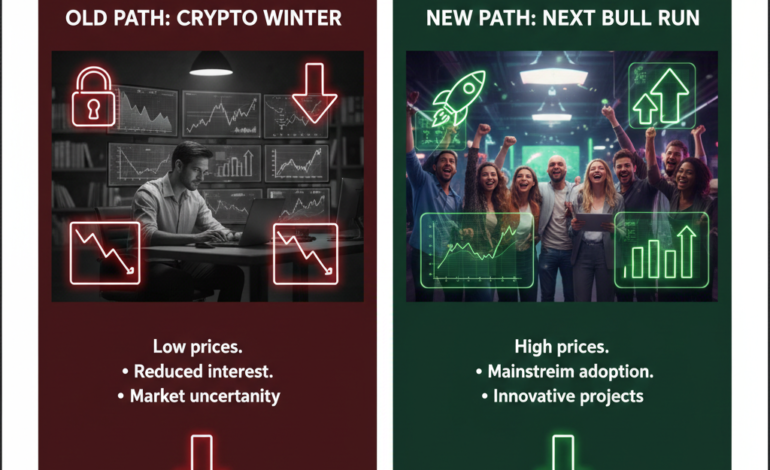

Market cycles are inevitable. From the stock market to real estate, asset prices tend to move in waves, driven by economic shifts, investor sentiment, and technological adoption. The cryptocurrency market is no exception, though its waves are often taller and crash harder than traditional sectors.
As the dust settles from previous market fluctuations, eyes are turning toward 2026. For many analysts and investors, the convergence of historical patterns, macroeconomic shifts, and technological maturity suggests this period could mark a significant phase in the digital asset timeline. Bitcoin continues to dominate headlines, but the broader ecosystem—including Ethereum and emerging altcoin sectors—is evolving rapidly.
Understanding what drives these cycles is critical for anyone looking at the crypto space. It is not just about hype or viral trends; it is about liquidity, interest rates, and technological utility. This guide breaks down the factors that could influence the market leading up to 2026, exploring the mechanics of a potential bull run without offering financial advice.
What Is a Crypto Bull Run?
To understand where the market might go, we must first define the vehicle taking us there. A “bull run” describes an extended period where prices are rising, and investor confidence is high. In the context of cryptocurrency, this often involves Bitcoin setting new all-time highs, followed by a surge in Ethereum and smaller assets (altcoins).
Definition and market cycles
Crypto markets historically operate in four-year cycles, often loosely correlated with Bitcoin’s supply dynamics. A typical cycle moves through four phases: accumulation (buying while prices are low), the bull run (rapid price appreciation), distribution (selling for profit), and the bear market (price decline and consolidation).
Bull vs bear market basics
The distinction is psychological as much as it is financial. In a bull market, optimism drives buying pressure (“fear of missing out,” or FOMO). Bad news is often ignored, and good news sends prices soaring. Conversely, a bear market is defined by pessimism. Even positive developments fail to move the needle, and prices drift lower as investors seek safety in cash or stable assets. Understanding which phase the market is currently in is the first step in analyzing the potential for 2026.
Why 2026 Could Be a Turning Point for Crypto
Several independent factors are aligning that could make 2026 a pivotal year. These aren’t just isolated crypto events but are deeply tied to the global financial system.
Macro trends and global liquidity
Financial markets run on liquidity—essentially, how much cash is available in the global economy. When central banks inject money into the system or lower interest rates, capital tends to flow into “risk-on” assets like technology stocks and cryptocurrencies. Analysts are closely watching global M2 money supply charts. If 2025 and 2026 see a return to expansive monetary policy to stimulate slowing economies, the resulting wave of liquidity could lift crypto prices.
Institutional adoption signals
Previous cycles were driven largely by retail investors—individuals trading from their phones. The next cycle appears different. Major asset managers have entered the space, offering regulated investment products. When trillions of dollars in managed wealth gain easy access to digital assets, the potential for sustained upward pressure increases significantly.
Bitcoin’s Role in Potential Bull Run Momentum
Bitcoin remains the primary engine of the crypto market. Historically, where Bitcoin goes, the rest of the market follows.
Market dominance and sentiment
Bitcoin dominance refers to the ratio of Bitcoin’s market capitalization to the rest of the crypto market. Typically, a bull run begins with Bitcoin dominance rising as investors flock to the most established asset. Once Bitcoin stabilizes at a higher price, capital often rotates into Ethereum and other assets. If 2026 sees a bull run, history suggests it will likely be ignited by Bitcoin’s performance first.
Halving cycles and historical patterns
The “Halving” is a pre-programmed event where the reward for mining Bitcoin is cut in half, effectively reducing the new supply entering the market. This occurs roughly every four years. The 2024 halving reduced daily supply issuance, creating a supply shock. Historically, the full price impact of a halving is felt 12 to 18 months after the event. If this pattern holds, the supply constraint could meet rising demand right around late 2025 into 2026.
Ethereum’s Growth and Ecosystem Expansion
While Bitcoin is often viewed as “digital gold,” Ethereum is likened to “digital oil”—the fuel that powers a vast network of applications.
Smart contracts and decentralized applications
Ethereum’s value proposition lies in its utility. It hosts the majority of decentralized finance (DeFi) protocols and digital ownership platforms. As these applications become more user-friendly and integrate with traditional finance, the demand for ETH (used to pay transaction fees) increases. A bull run in 2026 would likely be supported not just by speculation, but by the actual usage of these networks.
Layer 2 scaling and innovation
One of Ethereum’s biggest hurdles has been high transaction costs. However, the proliferation of “Layer 2” networks—blockchains that sit on top of Ethereum to process transactions cheaply and quickly—has solved much of this issue. This infrastructure upgrade means the network is finally ready to handle mass adoption without becoming prohibitively expensive, removing a major bottleneck for growth.
Altcoins and Emerging Crypto Trends
Beyond the two giants, new sectors are emerging that could define the narrative of the next market cycle.
AI and Blockchain Projects
Artificial Intelligence is the dominant technological trend of the decade. Blockchain projects that offer decentralized computing power, data storage, or verification for AI models are gaining traction. The intersection of AI and crypto creates a narrative that appeals to tech-forward investors, potentially driving significant capital into these specific tokens.
Real-World Asset Tokenization
Real-World Asset (RWA) tokenization involves putting traditional assets—like real estate, treasury bills, or gold—on the blockchain. This allows for 24/7 trading and fractional ownership. This sector is particularly attractive to institutional investors because it bridges the gap between the stability of traditional finance and the efficiency of blockchain technology.
Gaming and Web3 Ecosystems
The gaming industry is massive, but players rarely own their in-game items. Web3 gaming aims to change this by giving players true ownership of digital assets. While early iterations prioritized finance over fun, the next generation of blockchain games—currently in development—focuses on gameplay quality. If a breakout hit emerges by 2026, it could bring millions of new users into the crypto ecosystem.
Key Indicators Investors Watch
Successful investors rarely rely on gut feeling. They look at data.
On-chain data and trading volume
Because blockchains are transparent, anyone can view activity in real-time. Metrics like “active addresses” (how many people are using the network) and “hash rate” (network security) are vital health checks. Rising transaction volume usually precedes price action. If on-chain activity spikes in 2025, it serves as a leading indicator for 2026 price movements.
Institutional inflows
Tracking the flow of money into crypto investment funds and ETFs provides a window into “smart money” behavior. Consistent weekly inflows suggest that large players are accumulating positions, while outflows indicate caution.
Stablecoin liquidity
Stablecoins (crypto pegged to the dollar) act as the “dry powder” of the market. When the supply of stablecoins increases, it means there is cash sitting on the sidelines ready to be deployed into Bitcoin or altcoins. A rising stablecoin market cap is often a precursor to buying pressure.
Role of Regulation in the 2026 Crypto Market
Regulation is often viewed as a hurdle, but clear rules are actually a catalyst for growth.
U.S. and global policy shifts
The regulatory landscape in the United States, Europe, and Asia is becoming clearer. The EU’s MiCA (Markets in Crypto-Assets) regulation, for example, provides a comprehensive framework for the industry. As the U.S. clarifies its stance on whether tokens are securities or commodities, the uncertainty that keeps many conservative investors away dissipates.
Compliance and investor confidence
institutional investors (pension funds, insurance companies) cannot invest in unregulated “Wild West” markets. They require compliance. As exchanges and projects adopt strict KYC (Know Your Customer) and AML (Anti-Money Laundering) standards, the crypto market becomes “investable” for the world’s largest pools of capital.
How Macroeconomic Factors Affect Crypto Cycles
Crypto does not exist in a vacuum. It is heavily influenced by the cost of money.
Interest rates and inflation
There is a direct cause-and-effect relationship here. When central banks raise interest rates to fight inflation, borrowing becomes expensive. Investors can get a safe 5% return from a savings account, so they have less incentive to buy risky assets like crypto. Conversely, when inflation cools and rates are cut, savings accounts yield less. Investors are then forced to seek higher returns in riskier markets, fueling bull runs. The potential for rate cuts leading up to 2026 is a major component of the bullish thesis.
Risk-on vs risk-off environments
This refers to investor behavior. In a “risk-on” environment (growing economy, low rates), money flows into tech stocks and crypto. In a “risk-off” environment (recession fears, geopolitical conflict), money flees to the safety of the US Dollar and Gold. Monitoring global economic health is essential for predicting which environment will dominate in 2026.
Risks That Could Delay a Bull Run
Despite the optimism, significant hurdles remain.
Market volatility
Crypto remains notoriously volatile. A 30% drop in a week is not uncommon. This volatility can shake out inexperienced investors and trigger cascades of liquidation that suppress prices for months.
Regulatory uncertainty
While regulation is improving, it is not settled. Sudden enforcement actions or bans in major economies can halt momentum instantly. The legal battles between crypto companies and regulators like the SEC are ongoing risks that could dampen sentiment.
Overleveraged trading
When traders borrow money to bet on prices going up, they create leverage. If the price drops slightly, these traders are forced to sell to cover their loans, driving the price down further. This “flush out” of leverage is a common cause of sudden market crashes that delay sustainable growth.
Retail vs Institutional Participation
The structure of the market is changing fundamentally.
Changing market structure
In 2017 and 2021, retail traders drove the hype cycles. In 2026, institutions may take the wheel. Institutional capital is “sticky”—it tends to stay invested for longer periods compared to retail traders who panic sell. This could lead to a market that is less volatile but perhaps slower moving than the explosive rallies of the past.
ETF and large-scale investment impact
The approval of Spot Bitcoin and Ethereum ETFs allowed traditional brokerage accounts to hold crypto exposure without managing private keys. This integration bridges the gap between Wall Street and the blockchain, creating a consistent pipeline of demand that didn’t exist in previous cycles.
Is the Next Bull Run Different from Previous Cycles?
Every cycle has a mantra of “this time is different.” Usually, it isn’t. However, the maturity of the asset class suggests some changes.
More mature infrastructure
We have moved past the days of unreliable exchanges and frequent hacks being the norm. Custodial solutions are now enterprise-grade. The “plumbing” of the financial system has been connected to crypto, making it easier to onboard users.
Broader global adoption
Crypto is no longer a niche interest for tech enthusiasts. It is being used for remittances in developing nations, as a hedge against inflation in unstable economies, and as a treasury asset for corporations. This utility provides a floor for prices that speculation alone cannot support.
How Investors Can Think About Market Cycles
Navigating these waters requires a steady hand and a clear head.
Long-term perspective
Trying to time the exact bottom or top of a market is nearly impossible. Successful market participants often zoom out, looking at multi-year trends rather than daily candles. If the thesis is that digital assets will be more valuable in ten years than they are today, the volatility of 2026 becomes noise rather than a signal.
Risk awareness and diversification
Crypto should generally be considered the high-risk portion of a portfolio. Diversification—holding different types of assets—remains the standard defense against unforeseen market collapses. Betting everything on a single outcome is gambling, not investing.
Navigating the Future of Digital Assets
As we approach 2026, the convergence of macroeconomic shifts, technological upgrades like Layer 2 scaling, and the clarity of new regulations sets the stage for a potentially dynamic market. Whether this results in a historic bull run or a period of steady maturation remains to be seen.
The variables are complex, linking the code of the blockchain to the decisions of central bankers. For investors, the key is education and risk management. By understanding the cause-and-effect relationships between global liquidity and asset prices, one can navigate the volatility with greater confidence. The next chapter of the crypto story is being written, and 2026 looks to be a pivotal page.
FAQs – Crypto Bull Run 2026
What signals a crypto bull run?
Common signals include rising trading volume, increased stablecoin liquidity, a surge in “active addresses” on-chain, and Bitcoin breaking key technical resistance levels while dominating market share.
Will Bitcoin lead the next cycle?
Historically, yes. Bitcoin usually moves first due to its size and liquidity, drawing attention and capital to the market before that capital rotates into Ethereum and smaller assets.
Is Ethereum still growing long term?
Yes. Ethereum continues to lead in developer activity, decentralized finance (DeFi) total value locked, and NFT ecosystems. Its transition to Layer 2 scaling solutions positions it for continued growth.
Can altcoins outperform during bull markets?
During the peak of a bull market, altcoins often outperform Bitcoin in percentage gains due to their smaller market caps (it takes less money to move the price). However, they also carry significantly higher risk and downside potential.
What risks should crypto investors watch?
Key risks include global recession (which reduces investment capital), strict regulatory crackdowns, and security vulnerabilities in specific protocols or exchanges.