


Global Football Power Shift: Which Nation Is Dominating in 2026?
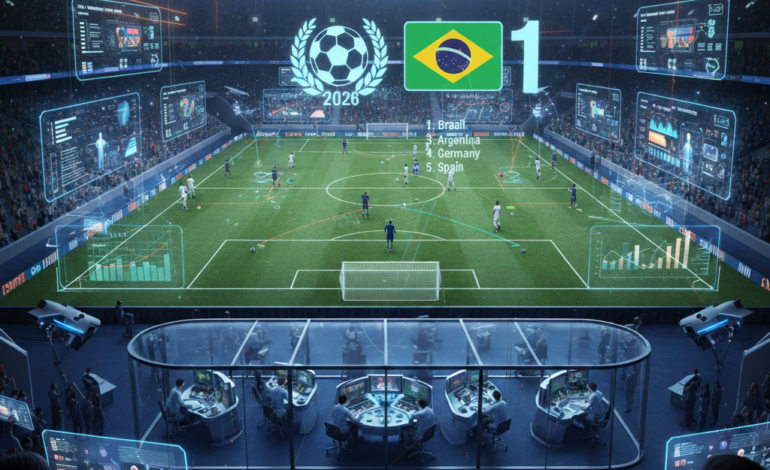

The landscape of international football is rarely static, but 2026 represents a unique inflection point in the sport’s history. As the world prepares for the largest FIFA World Cup ever held, featuring 48 teams across three North American nations, the traditional hierarchy of global football is facing its sternest test yet. For decades, a select group of European and South American nations held a monopoly on success. However, data from the last four years suggests that the gap between the established elite and the rest of the world is rapidly closing.
This shift is not accidental. It is the result of years of investment in youth academies, the democratization of tactical data, and the globalization of player talent. Nations that were once considered outsiders are now consistently reaching the knockout stages of major tournaments, while traditional powerhouses find themselves fighting harder to maintain their status. The definition of dominance is evolving from simple trophy counts to consistency across ranking metrics, squad depth, and tactical adaptability.
Understanding who dominates in 2026 requires looking beyond the history books. It demands an analysis of current performance trajectories, the sustainability of talent pipelines, and the tactical innovations defining the modern game. As we approach this new era, the question is not just who will lift the trophy, but which nations have built the infrastructure to stay at the top.
Why 2026 Marks a Global Football Power Shift
The 2026 cycle is distinct because of structural changes to the game itself. The expansion of the World Cup to 48 teams alters the mathematics of qualification and tournament strategy. Historically, limited slots meant that strong teams from Africa, Asia, and North America were often left at home, skewing the perception of global strength toward Europe and South America. With more opportunities for cross-continental competition, the true depth of global football will be on display.
Changing tactics and youth development
Tactical knowledge is no longer the proprietary secret of top European leagues. Advanced coaching education and video analysis software are accessible globally. Smaller nations can now implement sophisticated pressing systems and defensive low blocks that neutralize the individual brilliance of superstar opponents. Furthermore, youth development has standardized. Academies in Senegal, Japan, and the United States are producing technically proficient players who transition seamlessly into top European clubs, raising the baseline quality of their respective national teams.
Expanded international competitions
The introduction of competitions like the UEFA Nations League and the expansion of continental tournaments (like the Copa América and AFCON) have replaced friendly matches with competitive fixtures. This ensures that national teams are battle-hardened and cohesive. For emerging nations, this consistent exposure to high-stakes football accelerates development, allowing them to bridge the experience gap that previously separated them from the elite.
The Current Dominant Nations in World Football
Despite the rising tide of mid-tier nations, a specific cadre of countries continues to set the standard. These nations combine historical pedigree with modern infrastructure, allowing them to regenerate talent cycles effectively.
Spain leading global rankings
Heading into the 2026 cycle, Spain occupies the summit of the rankings. Their dominance is attributed to a renewed tactical identity that blends their traditional possession-based style with more direct, vertical attacks. Spain’s ability to integrate young talents—often teenagers—into the senior squad without a drop in performance levels speaks to the unparalleled quality of their domestic coaching structure. Their consistency in qualifying campaigns and continental performance metrics keeps them statistically ahead of the pack.
Argentina, France, and England among top contenders
Argentina remains a formidable force, buoyed by the continuity of their coaching staff and a generation of players who have tasted success. Their resilience and tactical flexibility allow them to navigate difficult tournament brackets. France boasts perhaps the deepest talent pool in the world; for every starter injured, they have a replacement of Champions League quality. England follows closely, with a squad comprised of physically imposing and technically gifted players excelling in the Premier League. These three nations consistently reach the latter stages of tournaments, reinforcing their positions near the top of the hierarchy.
Brazil and Portugal maintaining elite status
Brazil remains the gold standard for individual talent production. While they face tactical questions against organized European defenses, the sheer volume of world-class attackers at their disposal ensures they are perennial favorites. Portugal has evolved from a team reliant on a single superstar into a cohesive unit with elite players in every position. Their tactical versatility allows them to control games against weaker opposition and counter-attack effectively against peers.
Rising Football Nations Challenging the Elite
The most interesting narrative of the 2026 cycle is the emergence of challengers who refuse to be intimidated by legacy. These nations have moved past the “underdog” label and are now legitimate threats to the established order.
Morocco and Senegal’s Breakthrough Momentum
Morocco’s historic run to the World Cup semi-finals was a watershed moment for African football, proving that an organized defense combined with elite technical skill can dismantle European giants. This was not a fluke but the result of significant investment in the Mohammed VI Football Academy and a concerted effort to recruit the diaspora. Similarly, Senegal has established itself as the premier power in Sub-Saharan Africa. With a squad backbone playing in Europe’s top five leagues, they bring a physicality and tactical discipline that few teams enjoy facing. Both nations have seen historic climbs in the rankings, signaling that the African continent is ready to compete for the ultimate prize.
Netherlands and Croatia’s Consistent Performance
While not “new” powers, the Netherlands and Croatia consistently punch above their weight relative to their population size. The Netherlands continues to produce tactically intelligent defenders and midfielders, maintaining a system that prioritizes total football principles. Croatia, despite an aging core, relies on a midfield technical mastery that allows them to control the tempo of matches against technically superior opponents. Their ability to drag games into deep waters—often winning in extra time or penalties—showcases a mental fortitude that statistical models often struggle to quantify.
Emerging Teams from Asia and Africa
Beyond the headline acts, teams like Japan, South Korea, and Ecuador are narrowing the margins. Japan’s victory over European heavyweights in recent years demonstrated the success of their “2092” long-term plan. Their players are now staples in the Bundesliga and Premier League, bringing high-intensity pressing and technical precision to the national team. These emerging teams are no longer satisfied with participation; they arrive at tournaments with the explicit goal of reaching the quarterfinals or beyond.
How FIFA Rankings Reflect the Power Balance
The FIFA ranking system, while occasionally criticized, offers the most objective longitudinal data on team performance. It rewards consistency over long periods, which explains why European and South American teams dominate the top 10.
Spain ranked No.1 heading into 2026
Spain’s position at No. 1 is a reflection of match-to-match consistency. By winning qualifying games, performing well in the Nations League, and avoiding defeats in friendlies, they maximize their coefficient points. This ranking ensures they receive favorable draws in major tournaments, creating a virtuous cycle of success.
Strong European and South American dominance
A look at the top 20 rankings reveals a heavy concentration of UEFA (Europe) and CONMEBOL (South America) nations. This is partly due to the high coefficient value of matches played within these confederations. However, the gap in points between the top 10 and the top 20 is shrinking, indicating that while the elite are still ahead, their margin for error is decreasing. A string of poor results can now see a top-tier nation drop significantly, as seen with historical powerhouses like Italy or Germany during transition periods.
Tactical Trends Driving Modern International Football
The game played in 2026 looks vastly different from the game played in 2010. The speed of play and the demand for cognitive processing have increased exponentially.
Data analytics and pressing systems
Data analytics drives recruitment and match preparation. Teams now have access to heat maps, passing networks, and expected goals (xG) models for every opponent. This has led to the universal adoption of pressing systems. Teams are conditioned to win the ball back high up the pitch, forcing turnovers in dangerous areas. This trend benefits athletic, younger squads and punishes teams that rely on slow, methodical build-up play without distinct purpose.
Youth academies shaping new stars
The modern player is developed to be a generalist. Defenders must be able to pass like midfielders, and goalkeepers must act as sweepers. Academies worldwide are prioritizing decision-making under pressure. This homogenization of training means that a 19-year-old from Ecuador often has the same tactical understanding as a 19-year-old from Belgium, leveling the playing field when their national teams meet.
Role of Major Tournaments in Defining Dominance
Dominance is ultimately ratified by silverware. The ecosystem of tournaments determines who holds the power.
UEFA Nations League and continental cups
The UEFA Nations League has increased the competitiveness of European football by pitting top teams against each other frequently. However, it has also insulated European teams from facing styles from other continents. Conversely, the Copa América remains a test of physical endurance and individual flair. Success in these continental cups is the primary driver for FIFA ranking points, acting as the barometer for form leading into the World Cup.
World Cup performance shaping rankings
While consistency matters, the World Cup carries the heaviest statistical weight. A deep run in the tournament can sustain a nation’s ranking for years. For example, Morocco’s ranking surge was almost entirely driven by their World Cup performance. For 2026, the expanded format provides more opportunities for teams to gain these high-value points, potentially leading to a volatile reshuffling of the top 20 post-tournament.
Europe vs South America: Who Leads in 2026?
The rivalry between Europe and South America defines international football. Since 2002, Europe has largely dominated the World Cup, but Argentina’s recent success has reignited the debate.
European depth vs South American individual talent
Europe’s advantage lies in systemic depth. A nation like France or Germany can field two or three competitive XIs. The infrastructure and financial resources of European federations allow for comprehensive scouting and development. South America, by contrast, relies on a ceaseless production line of unique individual talent—players who can break rigid tactical systems with moments of improvisation. In 2026, the battle will be between Europe’s structural perfection and South America’s creative chaos.
Key Players Influencing National Team Success
Individual brilliance still decides tight matches. The impact of specific players and coaches cannot be overstated.
Golden generations and squad depth
We are witnessing the maturing of “golden generations” in nations like England and Portugal. These are cohorts of players who grew up playing together at the youth level and are entering their prime simultaneously. Dominance in 2026 will likely belong to the nation that best manages the ego and tactical integration of these star-studded squads.
Coaching philosophy impact
The role of the national team manager has shifted from selector to system-builder. Coaches like Lionel Scaloni (Argentina) and Didier Deschamps (France) have shown that pragmatism often beats idealism in tournament football. The ability to adapt tactics mid-game is now a prerequisite for success.
Dark Horses That Could Surprise in 2026
If the power shift is real, we must look for the teams sitting just outside the elite.
Mid-tier teams rising through analytics and development
Nations like Denmark, Switzerland, Uruguay, and the United States fit the “dark horse” profile. They utilize sophisticated data analytics to identify market inefficiencies and optimize player performance. While they may lack the depth of France or Brazil, their starting XIs are competitive enough to beat anyone on a given day. These teams are the primary beneficiaries of the global leveling of tactical knowledge.
Globalization of Football Talent
National teams are no longer strictly bound by geography in the way they once were.
Dual-nationality players
The recruitment of dual nationals has changed the landscape. Players born and developed in Europe are increasingly choosing to represent their parents’ or grandparents’ nations of origin. This brings Champions League-level experience to African, Asian, and Caribbean national teams. This trend redistributes talent away from the traditional European powers and strengthens the global middle class of football nations.
International club influence on national teams
The concentration of wealth in the Premier League and other top European leagues means the best players from around the world play against each other weekly. A defender from South Korea faces a striker from Norway every weekend. This familiarity demystifies opponents. When these players meet at the World Cup, the “fear factor” of facing a top nation is significantly reduced.
Future Outlook: Is Football Becoming More Balanced Globally?
Looking toward 2026 and beyond, the trajectory points toward a more balanced global game. The days of 8-0 scorelines in the World Cup group stages are becoming rarities.
Expansion of competitive nations
The pool of nations capable of winning a knockout game has expanded from 10-12 to 20-25. While the very top of the pyramid is still occupied by the historic giants, the base is wider and stronger than ever before.
Less predictable tournament outcomes
As tactical gaps close and physical fitness levels standardize, matches are increasingly decided by fine margins. This leads to higher variance in tournament outcomes. The definition of dominance in 2026 may simply be the ability to survive the unpredictability that this new parity creates.
Future Outlook: Moving Forward
The 2026 World Cup will likely be the ultimate stress test for the old world order. Whether the trophy remains in the hands of the traditional elite or signals a new era for an emerging power, one thing is clear: the margin for error has never been smaller. For fans, this promises the most competitive and unpredictable era of international football in history.
FAQs – Global Football Power Shift 2026
Which country is ranked No.1 in football right now?
Heading toward the 2026 cycle, Spain holds the No. 1 position in global rankings, reflecting their consistent performance in qualifiers and continental competitions, as well as their tactical revitalization.
Are traditional football powers still dominant?
Yes, nations like Argentina, France, Brazil, and England remain at the top of the hierarchy due to their deep talent pools and competitive consistency. However, their margin of dominance over mid-tier teams is shrinking.
Which nations are rising fastest in world football?
Morocco and Senegal are leading the surge from Africa, while Japan represents the rising strength of Asian football. These nations have combined strong youth development with tactical discipline to challenge the elite.
How accurate are FIFA rankings?
FIFA rankings are statistically accurate in measuring long-term consistency and results over a four-year cycle. However, they may not always reflect immediate form or how a team matches up stylistically against a specific opponent in a knockout game.
Will new countries win major tournaments soon?
While breaking the monopoly on the World Cup is difficult, new nations are increasingly likely to reach semi-finals and finals. The expansion of tournaments increases the probability of a “first-time” winner in continental cups and deep runs by non-traditional powers in the World Cup.