
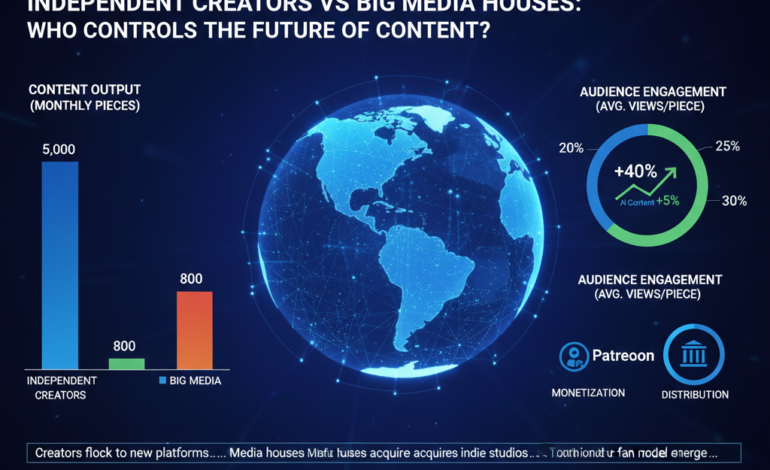
Independent Creators vs Big Media Houses: Who Controls the Future of Content?

For decades, the path to an audience was narrow and guarded. If you wanted to reach millions of people, you needed a broadcasting tower, a printing press, or a movie studio. Content distribution was a fortress, and large media conglomerates held the keys.
That fortress has not just been breached; it has been dismantled. The internet, social media algorithms, and affordable production technology have democratized the ability to create and distribute content. Today, a YouTuber in a bedroom studio can command higher viewership numbers than a prime-time news broadcast.
This shift has created a dual economy. On one side, legacy media houses continue to produce high-budget, polished entertainment. On the other, independent creators offer authenticity, speed, and hyper-niche relevance. As these two worlds collide, the question is no longer about who can broadcast, but who can capture attention in an increasingly saturated market. This analysis explores the shifting power dynamics between independent creators and big media houses, examining the economic, technological, and cultural factors defining the future of content.
The Evolution of Content Creation
To understand the current landscape, it is necessary to look at how barriers to entry have collapsed over the last twenty years.
Traditional Media Dominance
Throughout the 20th century, media was defined by scarcity. There were limited television channels, limited radio frequencies, and limited shelf space for magazines. This scarcity meant that media houses acted as powerful gatekeepers. They decided what stories were told, which artists became famous, and what information reached the public. This model relied on massive capital investment and vertical integration, controlling everything from production to distribution.
Rise of Independent Creators and Digital Platforms
The arrival of Web 2.0 changed the fundamental economics of media. Platforms like YouTube, Instagram, and later TikTok, separated distribution from production. Suddenly, anyone could publish video, audio, or text to a global audience for free.
This did not immediately topple big media, but it fragmented the audience. Viewers moved from passive consumption of scheduled programming to active selection of on-demand content. This shift gave birth to the “creator,” a distinct entity from the traditional “artist” or “journalist,” defined by their direct relationship with an online audience and their ability to bypass traditional gatekeepers.
Who Are Independent Creators?
The term “independent creator” covers a broad spectrum of individuals and small teams leveraging digital platforms to build businesses around their content.
Definition and Growth of the Creator Economy
The creator economy is an ecosystem of influencers, videographers, writers, and podcasters who monetize their skills directly. Unlike gig workers, creators build intellectual property and brands. Goldman Sachs estimates the creator economy could reach $480 billion by 2027. This sector is characterized by agility; creators can pivot their content strategies overnight based on audience feedback, a feat impossible for large corporations.
Platforms Enabling Solo Content Production
The infrastructure supporting creators has matured significantly. It is no longer just about hosting video. Platforms like Substack (for writers), Patreon (for memberships), and Shopify (for e-commerce) allow individuals to build diversified revenue streams. These tools handle the logistics of monetization, allowing creators to focus on output. Consequently, single-person media companies are now generating revenue that rivals small traditional publishing houses.
What Defines Big Media Houses?
While creators are rising, big media remains a formidable force. These are the legacy institutions—Hollywood studios, major broadcast networks, and global publishing groups—that have defined culture for generations.
Studios, Networks, and Legacy Publishing
Big media is defined by institutional knowledge and archival depth. Companies like Disney, Warner Bros. Discovery, and The New York Times possess vast libraries of intellectual property. They operate on a model of high-risk, high-reward, investing millions into single projects with the expectation of massive returns across multiple windows (theatrical, streaming, licensing).
Large-Scale Production Advantages
The primary differentiator for big media is the ability to execute complex, large-scale projects. An independent creator cannot produce a Marvel movie or cover a war zone with a team of thirty correspondents. Big media houses have the infrastructure for high-end production, legal clearance, and global localization that independent entities cannot currently match.
Independent Creators vs Big Media: Key Differences
The divergence between these two models comes down to three core areas: creative freedom, resources, and the nature of the relationship with the audience.
Creative Freedom and Authenticity
Independent creators operate with near-total autonomy. They answer only to their audience and platform guidelines. This allows for raw, unfiltered storytelling that often feels more “authentic” to viewers. They can express personal opinions, experiment with formats, and address niche topics that a boardroom would deem unmarketable.
Big media, conversely, creates by committee. Content must pass through layers of executives, legal teams, and advertisers. While this ensures a level of polish and brand safety, it often sanitizes the output. However, this structure also provides a safety net, ensuring a baseline of quality that user-generated content often lacks.
Production Scale and Resources
This is the most visible difference. Big media houses deploy armies of professionals—lighting technicians, sound engineers, editors, and VFX artists—to create immersive experiences. Their content is designed for the highest possible fidelity.
Creators often operate as “one-man bands.” While technology has closed the gap (4K cameras are now consumer goods), the scope is smaller. A creator relies on personality and information density rather than spectacle. They trade production value for production volume, releasing content daily or weekly to feed algorithmic hunger, whereas big media may spend years on a single project.
Audience Engagement and Community
Big media generally relies on a broadcast model: one-to-many. While they use social media, the communication is largely unidirectional.
Creators thrive on a many-to-many model. The comments section, live streams, and Discord servers allow for a two-way dialogue. This fosters a parasocial relationship where the audience feels personally invested in the creator’s success. This community loyalty is a powerful defensive moat that big media struggles to replicate.
Monetization Models in Modern Content
The way money flows through the content industry has bifurcated.
Ad Revenue, Sponsorships, and Subscriptions
Both sectors rely on advertising, but the mechanics differ. Big media deals in massive upfront buys and programmatic advertising at scale. Creators rely on platform-specific ad shares (like YouTube AdSense) and bespoke brand integration deals.
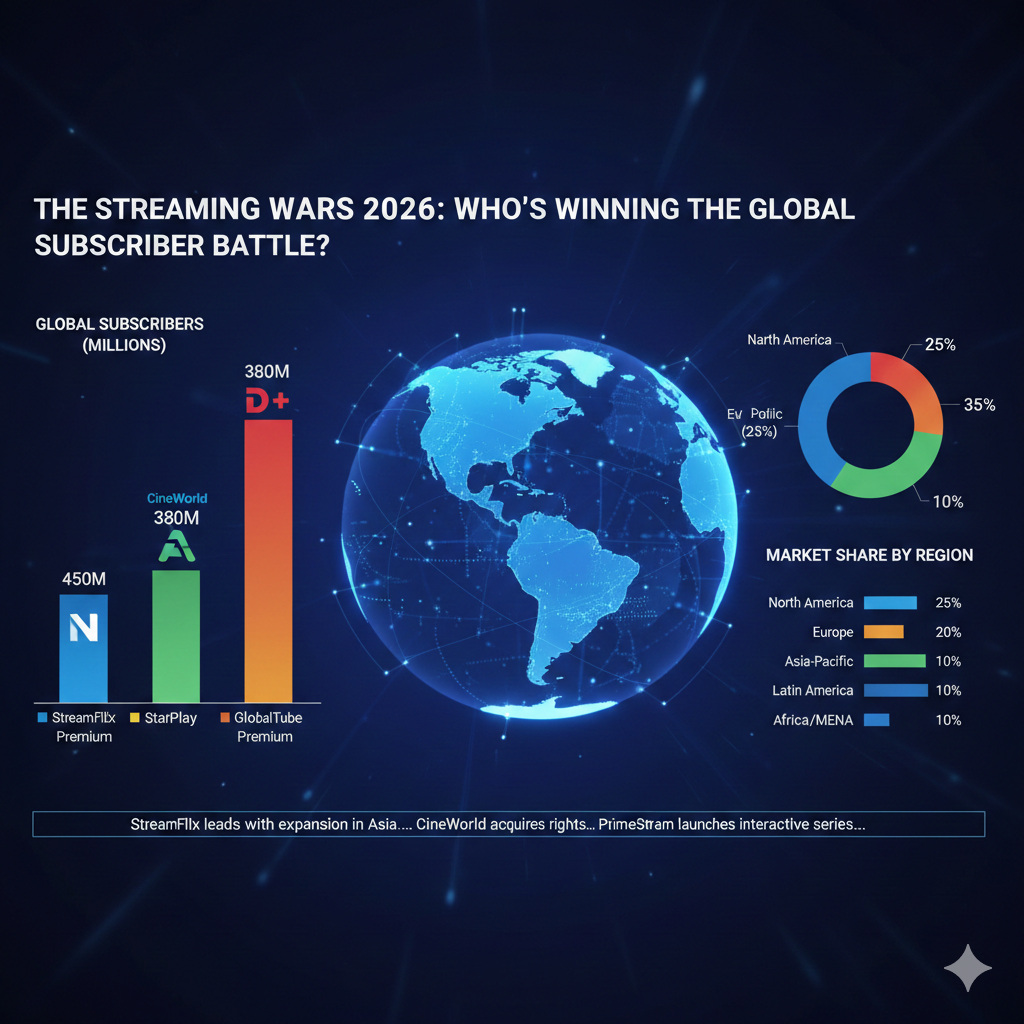
Subscription models have also evolved. Big media pushes bundled streaming services (Netflix, Disney+), offering access to a library. Creators offer access to themselves or exclusive perks via platforms like Patreon or Twitch subscriptions. The former sells content utility; the latter sells connection.
Platform-Driven Income Streams
Creators have diversified into direct-to-consumer products. From energy drinks to makeup lines, creators are leveraging their audience trust to launch physical goods, effectively becoming retailers. Big media monetizes through licensing and merchandising, but often lacks the direct sales conversion power of a trusted influencer face.
Role of Social Media and Streaming Platforms
Tech platforms act as the intermediaries for both groups, but they favor different metrics.
Algorithmic Discovery
Algorithms have replaced program directors. TikTok and YouTube prioritize watch time and engagement over production pedigree. This levels the playing field; a video shot on a phone can outperform a million-dollar studio clip if the algorithm deems it more engaging. This environment favors the independent creator who understands “retention editing” and trends better than a traditional producer.
Direct-to-audience Distribution
Streaming platforms have allowed big media to bypass cable providers, mimicking the direct connection creators have. However, creators still hold the advantage of portability. If a platform dies, a creator can move their audience to a newsletter or a new app. Big media is often tethered to expensive, proprietary infrastructure or long-term distribution contracts.
How Technology Is Changing Content Power Dynamics
Technological advancement is accelerating the convergence of these two worlds.
AI Content Tools
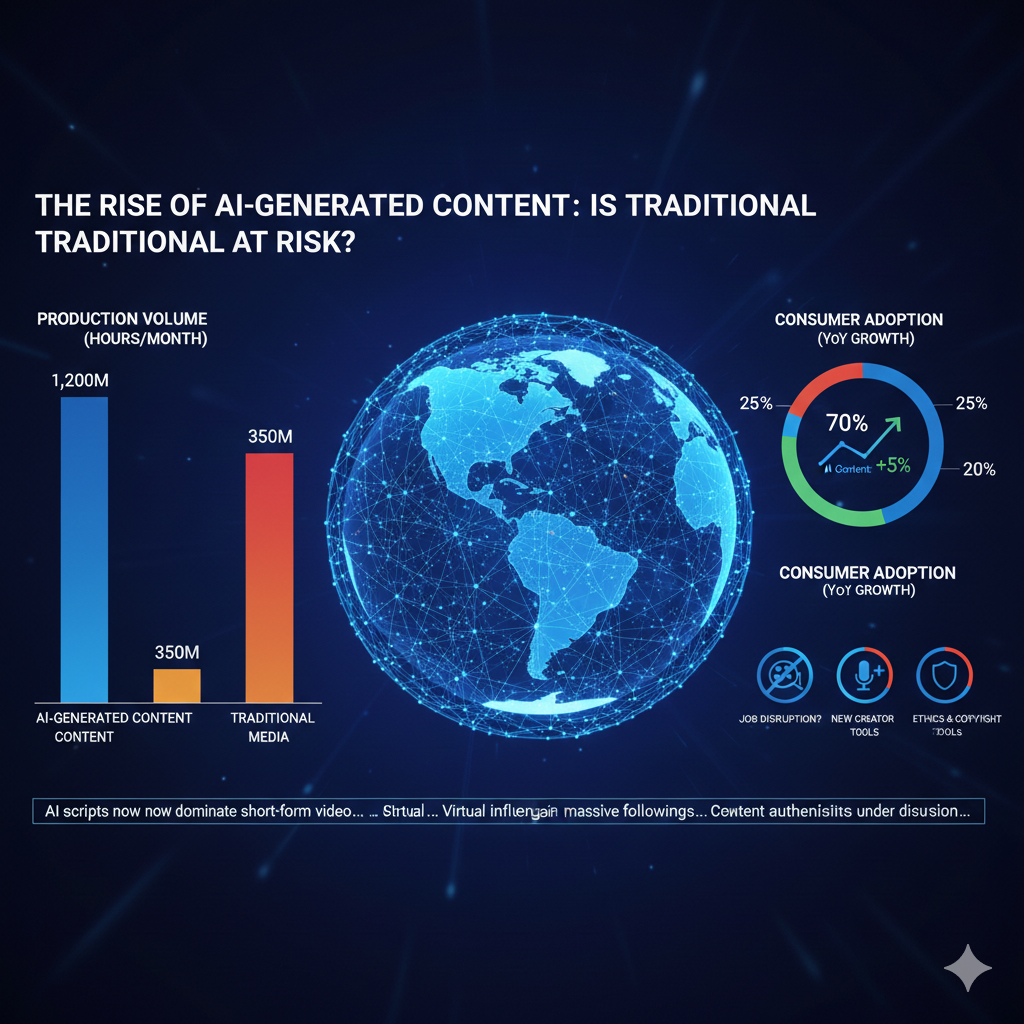
Generative AI is the great equalizer. Tools that generate images, voiceovers, and even video footage are reducing the cost of high-end production. An independent creator can now use AI to fix audio, color grade footage, or create visual effects that previously required a studio budget. This erodes the “production value” moat that big media has relied upon.
Low-Cost Production Technology
Cinema-grade cameras are affordable, and editing software is accessible on tablets. The technical gap between a Netflix documentary and a high-end YouTube documentary is narrowing visually. As hardware becomes cheaper, the differentiator becomes the storytelling and the access to the subject, not the pixels on the screen.
Advantages of Independent Creators
- Agility: Creators can react to news or trends within hours. Big media often takes weeks or months to greenlight projects.
- Trust: Edelman Trust Barometer data consistently shows that people trust “people like me” more than institutions. Creators are viewed as peers.
- Niche Dominance: A creator can build a viable business covering a topic as specific as “mechanical keyboard repair,” serving an audience big media would ignore as too small.
Advantages of Big Media Companies
- Prestige: There is still a “legitimacy gap.” Winning an Oscar or a Pulitzer carries weight that a viral hit does not.
- Global Infrastructure: Big media can dub content into 30 languages and distribute it physically and digitally worldwide.
- Risk Tolerance: Studios can absorb the loss of a $100 million failure. Most independent creators cannot survive a significant period of demonetization or a failed product launch.
Challenges Both Sides Face
Neither model is without significant threats.
Platform Dependency
Creators live in “rented houses.” A change in the YouTube algorithm or a ban on TikTok can destroy a business overnight. They own the content, but not the distribution pipes.
Big media faces a similar issue with “cord-cutting.” As cable revenues decline, they must compete in the streaming wars, where churn is high and loyalty is low. They are forced to play by the rules of tech giants like Apple and Amazon.
Content Saturation and Audience Fatigue
There is simply too much to watch. “Subscription fatigue” is setting in for streaming services, while “doom scrolling” is leading to burnout on social media. Both independent and corporate creators are fighting for a finite amount of human attention.
Collaboration Between Creators and Media Companies
Rather than a fight to the death, the market is seeing a merger of methods.
Partnerships and Co-productions
Big media is increasingly hiring creators. YouTubers are hosting late-night segments, and podcasters are signing exclusive deals with networks like Spotify and Amazon. Networks recognize that creators bring a built-in audience that marketing budgets cannot buy.
Influencer-Led Mainstream Media
We are seeing creators transcend their platforms. MrBeast is not just a YouTuber; he is a media mogul with a reach exceeding most cable networks. Independent production companies founded by creators are starting to sell content back to streaming giants, effectively becoming the new studios.
Future of Content Control
Who will control the future? The answer is likely a hybrid ecosystem.
Decentralized Content Ecosystems
Web3 and decentralized social media promise a future where creators own their data and distribution graphs entirely, removing platform risk. While still in its infancy, this could permanently tip the scales away from centralized media control.
Hybrid Media Models
The future will likely see legacy media adopting creator tactics—lower budgets, faster output, more personality-driven news—while creators adopt studio tactics—hiring teams, building production value, and diversifying IP.
The distinct line between “YouTuber” and “TV Producer” will continue to blur until it vanishes. Control will belong to those who can build the strongest direct relationship with the audience, regardless of whether they work from a bedroom or a boardroom.
FAQs – Independent Creators vs Big Media
Are independent creators replacing traditional media?
Not entirely. While they are capturing a significant share of attention, particularly among younger demographics, traditional media still dominates live sports, breaking global news, and high-budget scripted drama. The relationship is becoming complementary rather than purely competitive.
Why are creators gaining popularity?
Creators offer authenticity, relatability, and specific expertise that broad-appeal media cannot match. Audiences appreciate the direct connection and the ability to engage with content that aligns perfectly with their specific interests.
Do big media companies still dominate audiences?
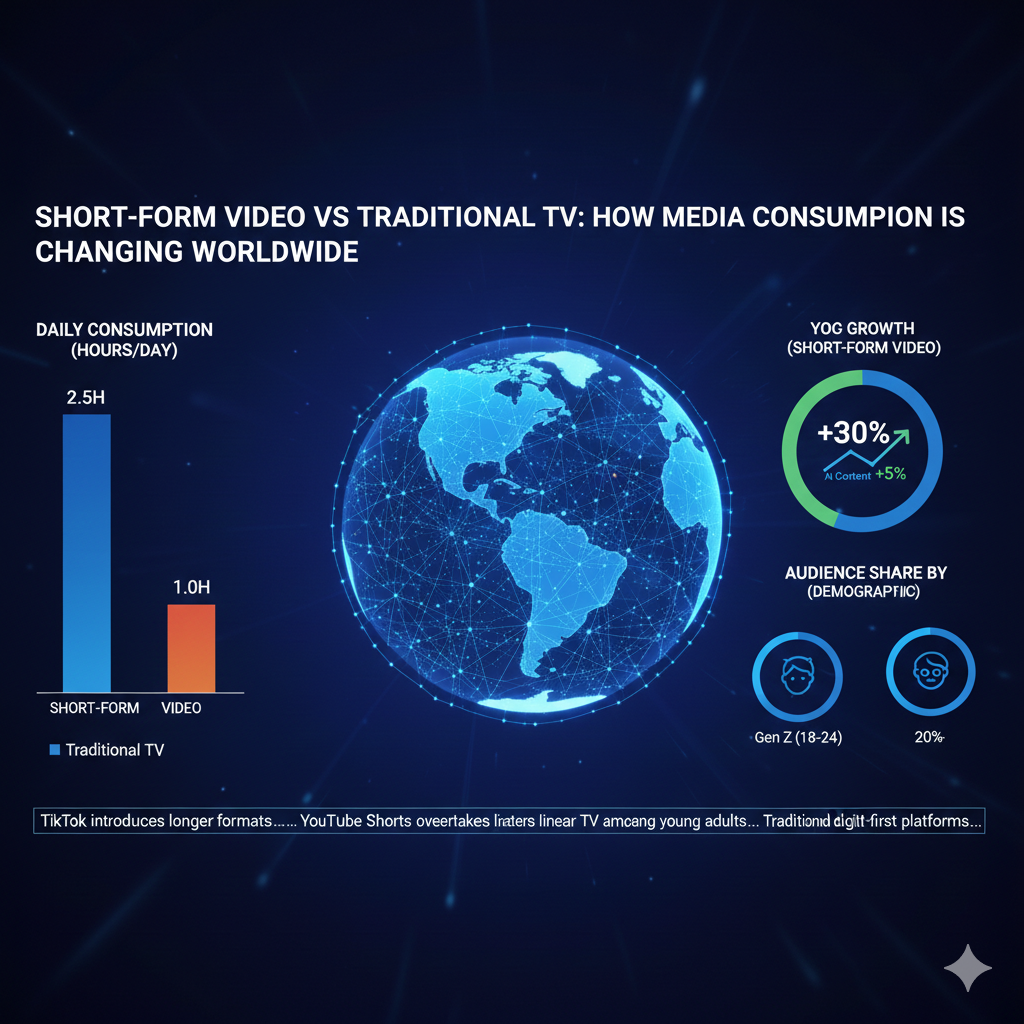
In terms of total reach and cultural impact for major events (like the Super Bowl or blockbuster film releases), yes. However, in terms of daily active engagement and time spent on screen, independent creators on social platforms are overtaking linear TV and traditional formats.
How do creators make money online?
Creators utilize a mix of revenue streams including ad revenue shares (YouTube/Facebook), brand sponsorships, fan funding (Patreon), selling merchandise, and affiliate marketing.
Will both models coexist in the future?
Yes. We are moving toward a symbiotic landscape. Media companies will leverage creators for distribution and talent, while creators will leverage media companies for capital and legitimacy. The entities that fail to adapt—stiff corporate media or unprofessional creators—will be the ones left behind.
The New Media Landscape
The battle between independent creators and big media is not a zero-sum game; it is a restructuring of the attention economy. We are moving away from an era of gatekeepers and toward an era of gate-crashers.
For the consumer, this is the golden age of choice. For the industry, it is a time of turbulent transformation. The future belongs to those who understand that in a world of infinite content, the only scarce resource is trust. Whether that trust is earned by a vlogger with a handheld camera or a studio with a century of history matters less than the ability to keep the audience watching.